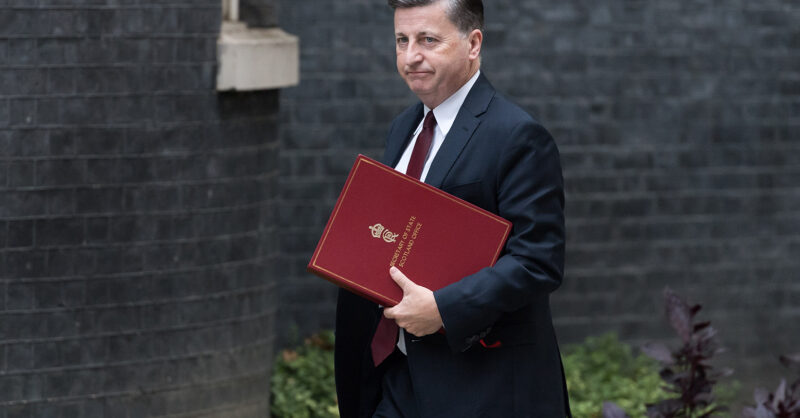
On Monday 20 July 2026, Andy Burnham becomes prime minister, and with that, the country will finally see who he puts in his cabinet. Among the jockeying for position, one recurring rumour suggests Douglas Alexander could be replaced as Scottish Secretary. Burnham may have a mind to promote him, but if not, there is a strong argument he should stay. The debate over Alexander is just one symptom of a bigger shift: Burnham's entire political project is built on the idea of devolving power away from Westminster, a vision he calls "Live Well". But what does that actually mean, and can it work?
At its simplest, Burnham's Live Well philosophy is about pushing power, money and decision-making out of London and into local communities. His core promises are "growth in every corner of the country", "more money in people's pockets", and "people taking back control of what matters to them". These sound similar to Keir Starmer's 2024 promise of "full fat devolution" to tackle regional inequality, or even the Vote Leave slogan "Take Back Control" from a decade ago. Burnham's pitch, delivered last month in the People's History Museum in Manchester, explicitly frames this as reversing the legacy of Thatcherism and returning to a postwar golden age of powerful local authorities building council housing and running industrial cities.
“Explains Andy Burnham's devolution vision, the political debate around it, and what it means for UK local governance and Scotland.”
Yet the story is more complicated. While Thatcher certainly stripped power from local government — motivated partly by Labour-controlled councils like the Militant Tendency in Liverpool — centralisation had already advanced significantly by the Seventies. The biggest step was taken by the 1945 Labour government, which nationalised major industries and services. So the "taking back control" narrative, while seductive, is incomplete. It doesn't reckon with how much society and people's expectations have changed since power began to move away. Asking whether Britain is still able to govern itself locally, and whether it actually wants to, is crucial.
For UK readers, the stakes are practical. Devolution is not just a Westminster game; it directly affects how your council tax is spent, how local buses run, and what housing gets built. The current system leaves many feeling that decisions are made by remote quangos or Whitehall civil servants who don't understand their town. Burnham's approach promises to change that, but critics argue that simply handing power back won't automatically restore prosperity or community pride. The narrative assumes that people feel poor and disenfranchised because power was taken away, and that returning it mechanically fixes everything. That may be too optimistic.
Q: What is Andy Burnham's "Live Well" philosophy? It's a plan to devolve power from Westminster to local areas, promising regional growth, more disposable income, and local control over services. Burnham frames it as reversing centralisation that began under Margaret Thatcher and continued for decades.
Q: Why is Douglas Alexander's role as Scottish Secretary relevant? Alexander is a key Scottish Labour figure, but some blame him for the party's poor Holyrood election performance. If Burnham moves him, it could signal a change in strategy for Scotland. Alexander's critics call him arrogant and brusque, but supporters argue Scotland isn't blessed with great politicians and should keep him.
Q: How does this affect Scotland specifically? The chief executive of Carnegie UK has argued that Scotland's current system of government is unsustainable and must learn from Burnham's Live Well philosophy. The implication is that Scotland, too, needs to reconsider how power is distributed and how local communities can have more say.
What happens next is uncertain. Burnham will announce his cabinet shortly after taking office, and the fate of Douglas Alexander will be a test of his commitment to Scotland. More broadly, the new PM will have to translate his devolution rhetoric into actual policy — and confront the hard truth that taking back control may be more complex than his speeches suggest. The coming months will show whether Britain can truly re-learn how to govern itself locally.