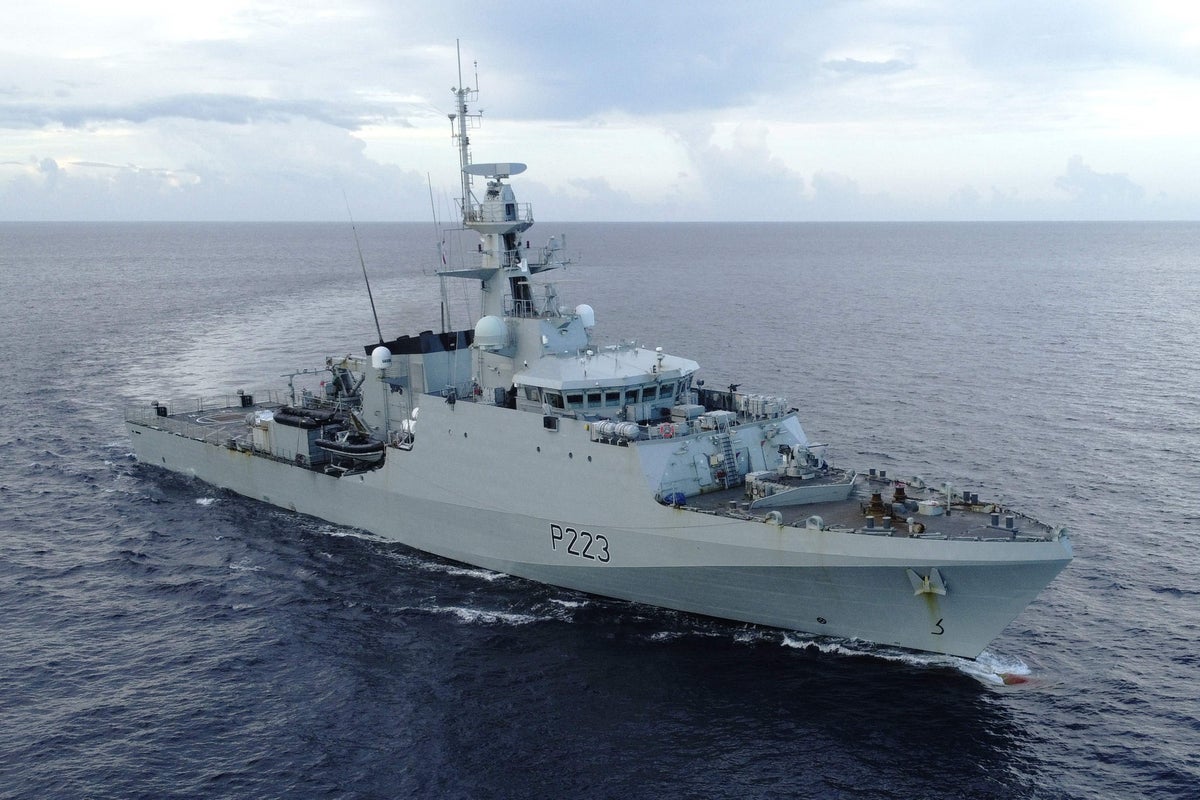
Hours after Argentina’s 2-1 World Cup semi-final victory over England, fireworks on the pitch were matched by a diplomatic explosion as Buenos Aires accused a Royal Navy warship of violating its territorial waters. Pablo Quirno, Argentina’s foreign minister, issued a statement on Wednesday night alleging that HMS Medway, a River-class offshore patrol vessel normally based in the Falkland Islands, had made an “unconsulted and illegal” journey through Argentine waters earlier in July. Quirno said a “formal note of protest” had been lodged with the British embassy to express “the strongest objection” to what he called a “military incursion”. The accusation came just after Argentina’s players held aloft a banner reading “Las Malvinas son Argentinas” – “The Falkland Islands are Argentinian” – sparking calls for a Fifa investigation.
Downing Street immediately rejected the claim. The prime minister’s official spokesperson stated that the UK had notified Argentina in advance of HMS Medway’s transit, which was part of a “routine logistics visit to Chile” between 5 and 8 July to support British Antarctic survey operations. “The Royal Navy always operates in full compliance with international law,” the spokesperson said, adding that the route from the Falklands to Chile was “the most direct practical route considering operational safety and weather factors”. A Ministry of Defence spokesman echoed this, insisting the passage through the Strait of Magellan to the Chilean port of Punta Arenas was an “innocent passage” under Article 17 of the UN Convention on the Law of the Sea, a treaty Argentina has also signed. “We don’t require diplomatic clearance for that,” a defence source said. “But we did notify the Argentinians in advance of the journey.”
“Argentina accused HMS Medway of illegal incursion after World Cup win; UK rejects claim.”
The incident adds to longstanding tensions over the Falkland Islands, which Argentina claims as “Malvinas”. The dispute erupted into war in 1982 after Argentina invaded the islands. In the build-up to Wednesday’s match, Argentina’s vice-president, Victoria Villarruel, had branded England “invaders” and “usurping pirates”, and after the final whistle she tweeted a victory message alongside a video of what appeared to be Argentinian soldiers, saying “it wasn’t just another match”. On Thursday morning, Sir Keir Starmer’s spokesman delivered a pointed riposte: “The World Cup might not be ours, but the Falkland Islands definitely are. Our position is unchanged. Self-determination rests with the islanders. Our commitment to the Falklands will never waver.” Tory leader Kemi Badenoch also weighed in, writing: “The Falkland Islands are British. The Conservatives will always defend them.”
While Argentina’s government insists the ship’s journey was a provocation, the UK maintains it was a routine transit fully in line with international law. The timing of Quirno’s complaint – made public hours after the football defeat – suggests the World Cup result may have amplified a simmering diplomatic row. But for now, the dispute over a patrol vessel’s course is a reminder that, even as the final whistle blows on the pitch, the battle for sovereignty over a distant archipelago continues.