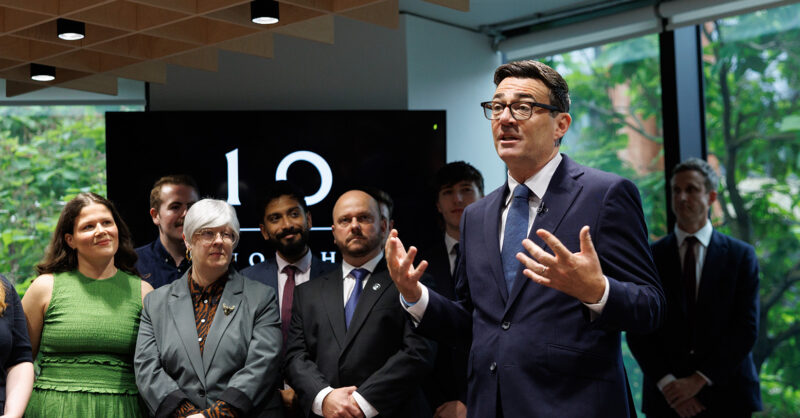
Before Andy Burnham even crossed the threshold of Downing Street, he had already made his first promise: to end rough sleeping. The return of people sleeping on the streets, a visible crisis largely eradicated by the last Labour government, had become a symptom of national decline under his predecessor. Now, in his first week as prime minister, Burnham has delivered a flurry of pledges that signal a clear departure from the Starmer years.
Among the early announcements are a VAT cut from electricity bills, a cap on bus fares, and additional tax relief aimed at pubs and music venues. None of these measures are huge in themselves, but together they paint a picture of a government actively trying to make life better, according to analysis by the New Statesman. The publication noted that the Today programme has been scrambling to rethink its agenda, exactly as it did not in July 2024, when the previous Labour administration took office.
“Andy Burnham's early promises include ending rough sleeping, VAT cuts, and bus fare caps.”
Burnham has retained Shabana Mahmood as home secretary and Bridget Phillipson in the equalities brief, suggesting continuity on social issues such as treating immigrants with humanity and trans rights. But in other areas, the new regime has made noises indicating a more significant shift. Burnham has expressed sincere enthusiasm for devolution and pledged to spend his political capital on social care reform, the biggest obstacle to local government. The New Statesman called it a genuine prescription for what has gone wrong.
Interpretations of “Burnhamism” vary. The right portrays him as an old-style tax-and-spend leftie who will lead to ruin. Others see it as Starmerism with better communication. But after two years of a Labour prime minister who seemed to think everything was fine, observers note the visible determination to have something to announce.
The promise to end rough sleeping is the most significant. If successful, it will not only bring vulnerable people indoors but also make streets feel safer and the country more prosperous. The New Statesman argued that it would show government can still make things better, referencing the “broken windows” theory proposed by social scientists James Q. Wilson and George L. Kelling in 1982, which holds that visible signs of disorder can encourage further anti-social behaviour.
The question now is whether Burnham can deliver. His early moves suggest a leader who intends to try.
