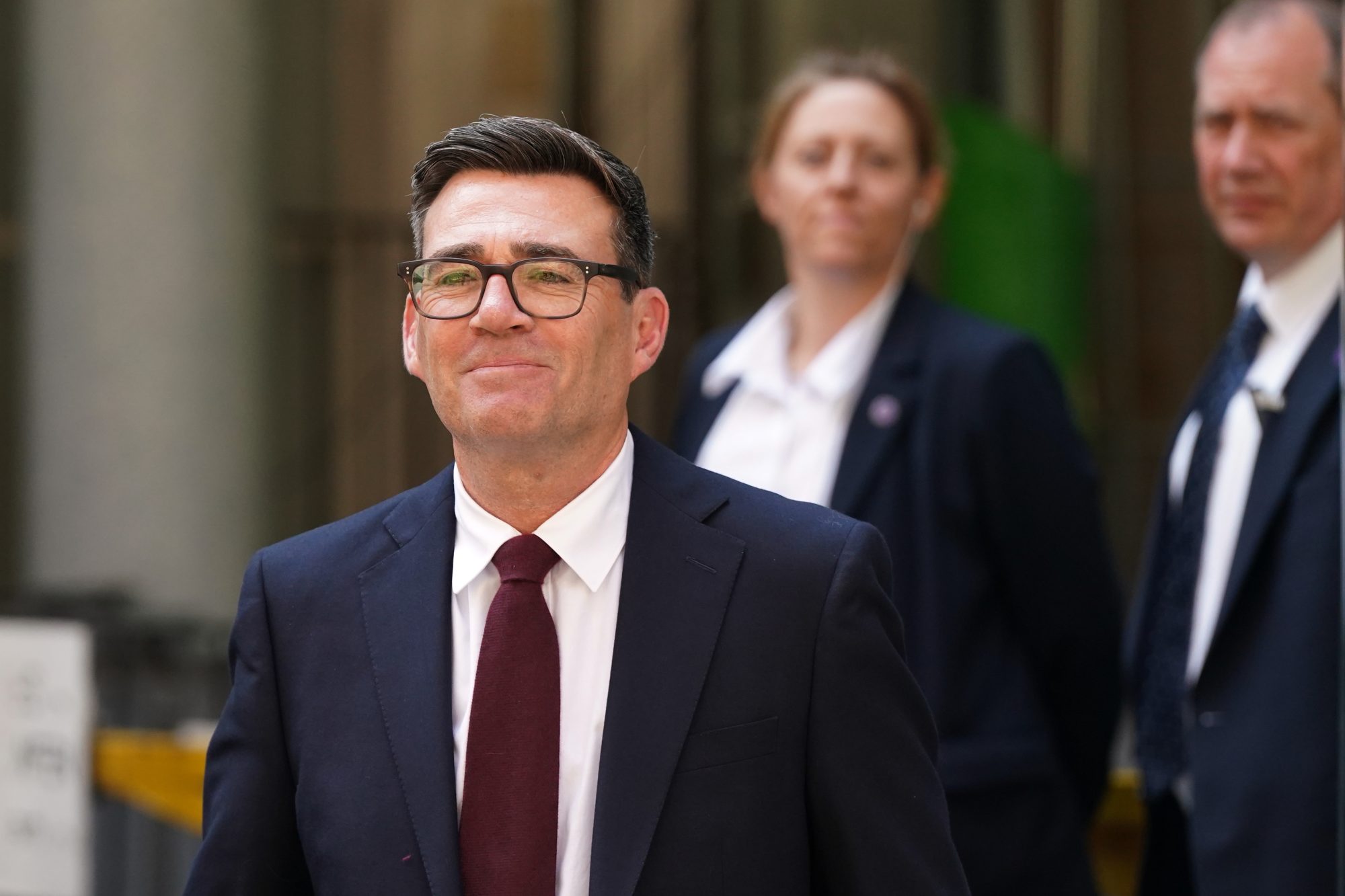
It was just five months ago that Andy Burnham retreated to his mayor's office in Manchester, blocked by Labour's ruling executive from standing for parliament. When I met him there a few weeks later, he told me he planned to deal with his disappointment with ambitious plans for his city region.
He wanted to appeal directly to Fifa to host the final of the women's football World Cup in 2035 in Manchester instead of Wembley. 'Imagine how electrifying that is for any girl growing up in the north of England,' he said. He was also joining forces with other mayors for a 'Great Northern' Olympic bid across the north of England, and a plan to host the Ryder Cup in Bolton. Sports bodies needed 're-educating' about the rest of the country, he said. Manchester had already poached the Brit Awards from London after half a century.
“Andy Burnham's 'Manchesterism' philosophy faces national test as he prepares to become PM.”
Big, bold gestures like these are a byproduct of Manchester's status as the fastest-growing city economy in the country. As Burnham prepares to become prime minister, will he be able to apply the same model to the whole nation? Even before he returned to parliament in June, there has been talk of 'Manchesterism' as a political-economic philosophy rooted in a critique of an over-centralised British state.
The city has a long history of blending free markets with a strong social spirit. Manchester's cotton traders championed free trade and liberal economics, alongside the co-operative movement, trade unions and the Suffragettes. The Manchester Ship Canal, emblem of monopoly-breaking free trade, required local government intervention backed by workers.
For an understanding of contemporary Manchester, you need to go back to 1996. Burnham had left the north-west by then. He told me how after graduating in the early 1990s, all he could get was an unpaid reporter role on the Middleton Guardian. 'I had to do what so many people of my generation, born in the 60s or 70s in the north-west of England had to do to get on in life,' he said. 'We had to go south.' By 1996, Burnham was an MP's researcher. That year, the IRA detonated the largest bomb in the UK since World War Two, devastating Manchester city centre. The reconstruction marked the start of Manchester's ascent from de-industrialisation.
Now, Burnham's own ascent from that unpaid local paper reporter to Number 10 will test whether a philosophy forged in one city's revival can transform a nation.