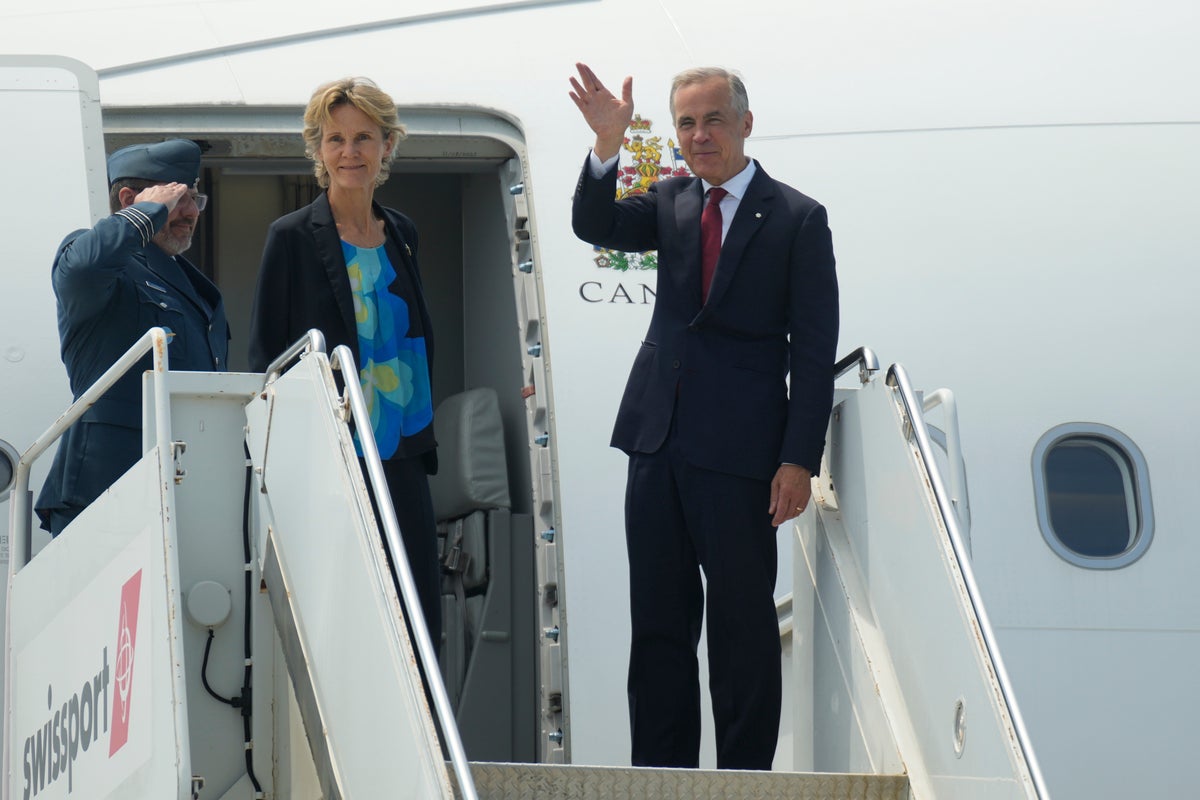
Canada selected Germany’s ThyssenKrupp Marine Systems on Monday to build 12 submarines, one of its largest military purchases, as it boosts defense spending to meet NATO targets. The decision came before Prime Minister Mark Carney headed to this week’s NATO summit, where allies face pressure to back higher defense spending with concrete plans. “As part of our commitments to defend Canada and support our allies, I am pleased to announce that Canada has selected TKMS as the preferred supplier for Canada’s Patrol Submarine Project,” Carney said. The German company beat South Korea’s Hanwha Ocean for the contract. ThyssenKrupp said its submarines would strengthen interoperability because many NATO allies already operate its conventionally powered vessels. Carney has pledged to raise defense spending to 5% of gross domestic product by 2035 after Canada reached NATO’s previous 2% spending target this year.
The announcement came as German Chancellor Friedrich Merz put his country’s rearmament drive at the center of government spending, with a draft budget approved by his cabinet Monday allocating one in every five euros of federal expenditure in 2027 to defense. By the end of the decade, Germany’s defense expenditure is projected to rise to account for nearly one-third of federal spending as Merz’s government races to meet NATO’s defense spending target of 5% of GDP. “We cannot defend ourselves against Putin with a balanced budget,” German Finance Minister Lars Klingbeil said in Berlin Monday when presenting the draft federal budget for 2027. “We must therefore make up for three decades in the shortest possible time, during which our military was cut back due to budget constraints.” For 2027, the government is planning total expenditure of €555.4 billion, of which €109.7 billion, or around 20%, will be dedicated to defense spending. That share is set to grow in the coming years with €183.7 billion to be spent on defense in 2030 out of a projected €635.4 billion total.
“Canada selects ThyssenKrupp for 12 submarines as Germany allocates 20% of 2027 budget to defense ahead of NATO summit.”
The 2027 spending plan was unveiled ahead of this week’s NATO summit in Ankara, where European leaders are expected to try to convince U.S. President Donald Trump that they are committed to boosting military spending and taking greater responsibility for Europe’s defense. “The United States spends more money on NATO than any other country, by far, to protect them, without getting any benefit from so doing,” Trump said in a Truth Social post on Thursday. He then singled out several European countries, including Germany, referring to their defense expenditure as “Ridiculous!” Merz hit back at Trump the following day. “Germany is doubling its defense budget within four years,” Merz said in Berlin. “This is the greatest effort we have ever made to strengthen our defense capabilities. In that regard, we have nothing to hide from anyone.” Germany in 2025 relaxed its constitutional debt brake by exempting a large share of defense spending from the rule to allow for a massive increase in military expenditure. But it’s unclear whether German public support for the increased spending will endure in the coming years, particularly as Klingbeil is likely to need to find cuts in other parts of the budget.
