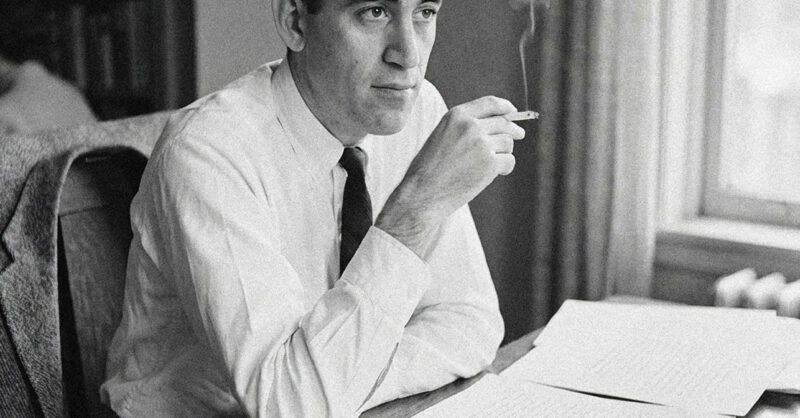
Seventy-five years ago this week, a novel appeared that one exasperated parent counted as containing 237 uses of the word “goddamn”, 58 of “bastard” and 31 of “chrissakes”. J.D. Salinger’s The Catcher in the Rye has sold more than 65 million copies since, yet its legacy remains as polarised as the adolescent rage it depicts – swinging between a portrait of a Christ-like truth-teller and the blueprint for today’s online misogyny.
Holden Caulfield, the 16-year-old scrawny virgin dropout in a deerstalker hat, narrates three days of wandering Manhattan after being expelled from prep school. He denounces everyone as “phony”, describes himself as on the verge of “puking” at the hypocrisy around him, and laces his account with “I means” and “and alls”. That voice, according to critics writing on the anniversary, now echoes across the internet. The novel is described as “a prehistory of the online male voice”, its moral vocabulary mapping onto Gen Z’s lexicon of “NPCs, normies, mids, soys” and other labels for those deemed inauthentic. Holden’s wounded disaffection and self-pitying confessionals, the argument goes, make him the original incel – a figure whose grand delusions have become the norm on Reddit, TikTok and darker corners of the web.
“The Catcher in the Rye turns 75, with interpretations of Holden Caulfield ranging from Christ-figure to original incel.”
Yet a quite different reading is also being revived this year. Some maintain that Holden Caulfield is a Christ-figure, half-human, half-divine, whose gimlet-eyed rejection of falsehood elevates him beyond mere teen angst. In this view, the novel’s worth is measured by the culture’s response to it – and that response has often been damning. The Catcher in the Rye was notoriously blamed for the 1980 murder of John Lennon; the assassin, Mark David Chapman, cherished the book and identified Lennon with Holden’s definition of a faker who makes life unlivable. Salinger himself, a reclusive Second World War veteran, has been accused of hypocrisy for his behaviour with teenage female admirers. The novel has been “stretched on the rack of its author’s life and forced to confess its own fraudulence”.
What is not in dispute is the book’s persistent grip. For a generation with declining reading habits, it remains among the few classics they have touched. The question the anniversary poses is whether Holden’s peculiar misanthropy speaks to our profoundest desires – or has simply become the internet’s house style.