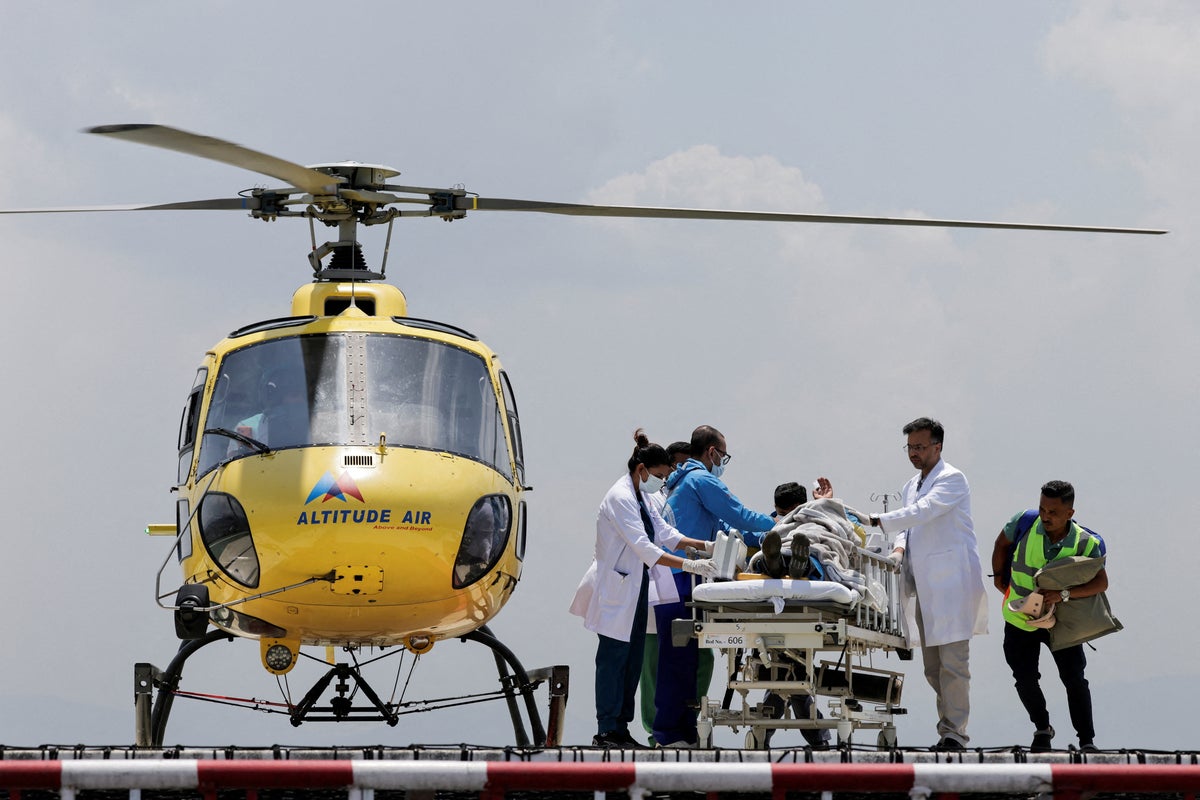
A Nepali climbing guide who spent six days stranded on Mount Everest without food or oxygen survived by chewing ice and eating a few chocolates he found in his pocket, he has told the BBC from a hospital bed in Kathmandu.
Hillary Dawa Sherpa, 57, was last seen alive on 29 May by former British soldier Chris Thrall, who was descending with him and a Polish climber near Camp 3 at about 7,500m (24,600ft). Thrall told the BBC he looked back up the mountain after helping the Polish climber and Dawa Sherpa had not moved. “As I look back up the mountain, as I helped this guy descend, Hillary Dawa didn’t appear to have moved, and certainly wasn’t descending, because we would have seen his head torch,” Thrall said.
“Nepali guide Hillary Dawa Sherpa survived six days on Everest without food or oxygen by chewing ice and eating chocolate.”
Dawa Sherpa’s oxygen had run out. “As the oxygen ran out, I couldn’t walk,” he told BBC Nepali. “I didn’t eat anything for the first two days. Then I began chewing ice. It hurt my teeth. I chewed the ice hard.” A ray of hope came when he discovered chocolates in his pocket, giving him enough energy to attempt a descent. But his progress was soon halted when he fell into a crevasse, where he remained trapped for two and a half days. “Stepping on the snow, I stood up and looked above… It felt I could get out from there,” he said, describing how an avalanche sent snow tumbling into the crevasse, allowing him to climb out. He continued descending through the night, narrowly avoiding another avalanche, until he finally saw other people – a clean-up crew working near the Khumbu Icefall, just above Base Camp.
“Boys were going up to collect the waste. I met them,” he said. The crew spotted him “sliding” down the mountain, according to the BBC. Pemba Sherpa of 8K Expeditions, overseeing the rescue, told AFP the veteran climber was found “close to the base camp … crawling down” with some frostbite but otherwise in good health. A rescue helicopter flew him to Hams Hospital in Kathmandu, where he reunited with his family – who had all but given up hope and had begun arranging funeral rituals. “I didn’t think I would be alive,” he told BBC Nepali. “I thought I would perish this way.”
He is now being treated for frostbite, dehydration and a fractured bone. But amid relief, his family have expressed anger that a rescue operation was not launched earlier, alleging discrimination because he is a local guide. They have filed a police complaint against his employer, Kathmandu-based Himalayan Traverse, and a formal grievance with Nepal’s Department of Tourism. “Action needs to be taken by the mountaineering department. It was negligence of the company that resulted in so much delay in starting rescue,” stated Dawa Sherpa’s nephew, Karma Gelje Sherpa.