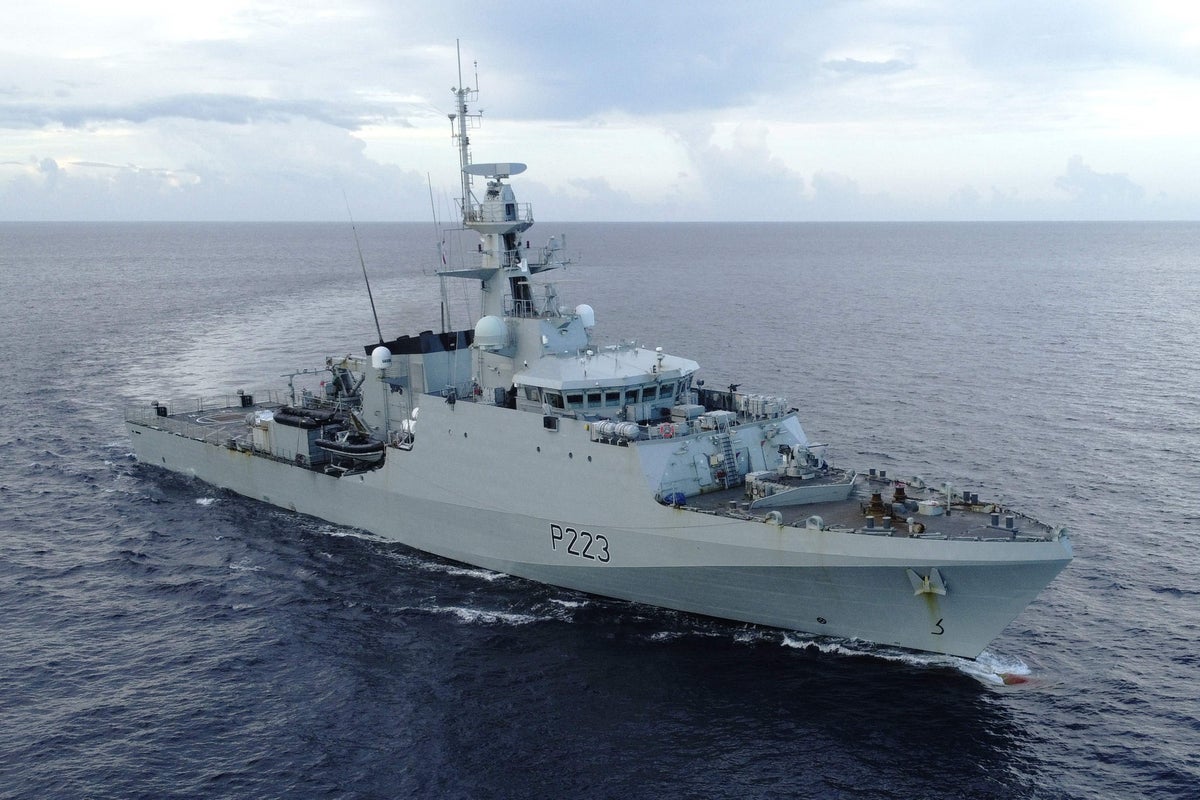
Late on Wednesday night, hours after Argentina beat England 2-1 in a World Cup semi-final, Argentina’s foreign minister Pablo Quirno accused a British warship of making an “illegal incursion” into Argentine waters. The complaint brought the long-running Falkland Islands sovereignty dispute roaring back into the headlines.
The warship in question is HMS Medway, a Batch 2 River-class offshore patrol vessel normally based in the Falkland Islands. Argentina claims the ship entered its territorial waters along the coasts of Santa Cruz and Tierra del Fuego earlier in July without prior notification. Quirno lodged a formal protest with the British embassy, expressing “the strongest rejection” of what he called a “military incursion.”
“Explains the Falklands sovereignty dispute amid recent UK-Argentina tensions.”
The UK government rejects Argentina’s version of events. Downing Street said it notified Argentina in advance that HMS Medway would make a routine logistics visit to Chile between 5 and 8 July to support British Antarctic survey operations. The Ministry of Defence described the transit as an “innocent passage” under Article 17 of the UN Convention on the Law of the Sea — a right that allows vessels to pass through territorial waters without permission as long as the journey is innocent. A defence source told The Telegraph that the UK does not require diplomatic clearance for such passages, but it did notify the Argentinians in advance.
The dispute over the Falkland Islands — known in Argentina as Las Malvinas — dates back centuries. The islands lie about 300 miles from mainland Argentina and 8,000 miles from Britain. Argentina has long claimed sovereignty, arguing it inherited the islands from Spain after independence. The UK says the islanders have the right to self-determination, and a 2013 referendum saw 99.8% vote to remain British. Tensions boiled over into war in 1982 after Argentina invaded the islands; Britain sent a task force and retook them after a conflict that killed 255 British and 649 Argentine personnel.
For UK readers, the dispute is a recurring flashpoint in Anglo-Argentine relations. In the aftermath of the World Cup match, Argentine players held up a banner reading “Las Malvinas son Argentinas” (The Falklands are Argentine). Argentina’s vice-president Victoria Villarruel had called England “invaders” and “usurping pirates” before the game, and tweeted afterwards that “it wasn’t just another match.” UK political leaders responded swiftly: Conservative leader Kemi Badenoch wrote that “The Falkland Islands are British”, and Sir Keir Starmer’s spokesman said “The World Cup might not be ours, but the Falkland Islands definitely are.” The incident reignites debate over defence commitments, sovereignty claims, and the practicalities of patrolling a remote British Overseas Territory.
Q: Why does Argentina claim the Falkland Islands? Argentina bases its claim on geography and inheritance: the islands are on its continental shelf and were part of the Spanish Empire until Argentina’s independence in 1816. Buenos Aires argues it took over sovereignty from Spain, and accuses Britain of forcibly occupying the islands in 1833.
Q: What is the legal status of the Falkland Islands today? The Falklands are a British Overseas Territory. Under UK law and the UN Charter, the islanders have the right to self-determination. In a 2013 referendum, 99.8% voted to remain British. The UK says this settles the matter; Argentina rejects the referendum as not legitimate.
Q: Could the dispute lead to armed conflict again? A return to full-scale war is considered unlikely. Both sides are signatories to the UN Convention on the Law of the Sea, and the UK maintains a military garrison on the islands. However, diplomatic spats — like the one over HMS Medway — keep tensions alive, and the issue remains emotionally charged, especially during sporting events.
What happens next? Argentina’s foreign minister said he had lodged a formal protest, and the UK insists its position is unchanged. The incident is likely to be raised in bilateral talks, but no further escalation is expected. The UK continues to operate HMS Medway and other vessels in the South Atlantic, while Argentina will continue to press its sovereignty claim diplomatically. The issue will almost certainly resurface again, particularly during major sporting events or moments of Argentine national pride.