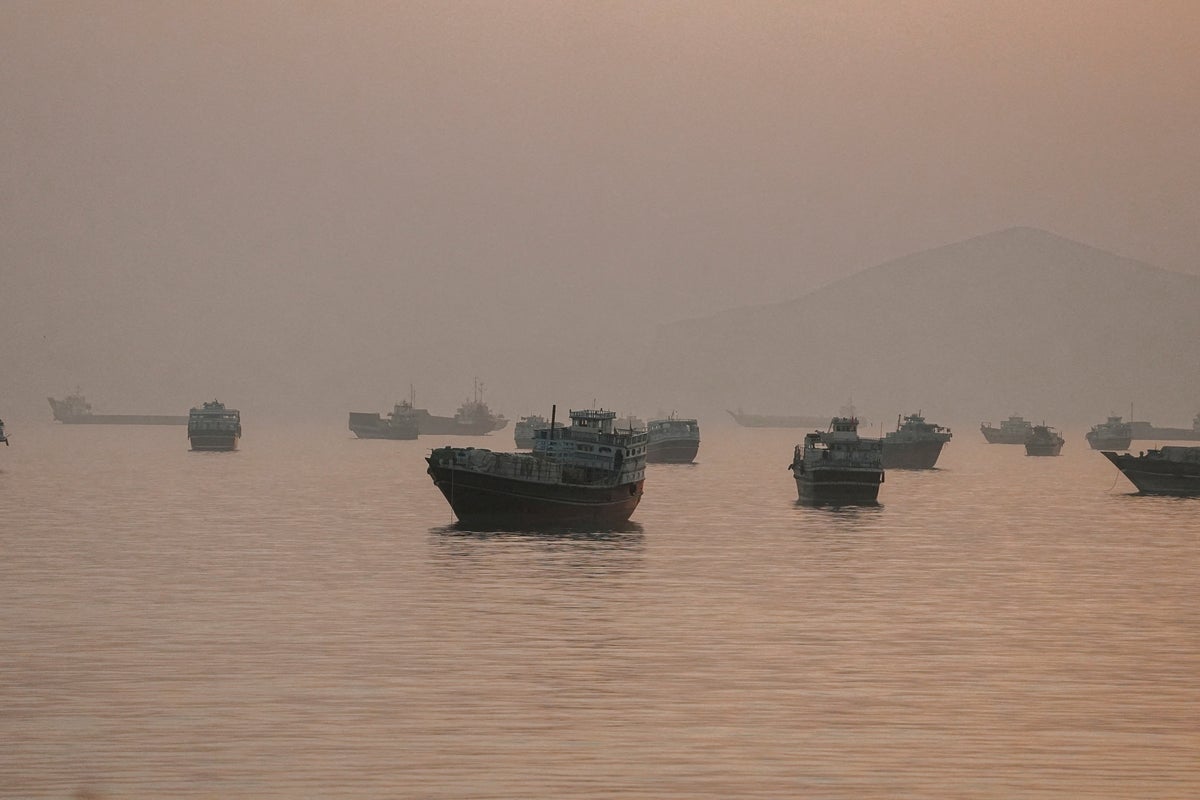
A Qatari LNG tanker was at risk of exploding and a Saudi crude tanker was damaged near the Strait of Hormuz on Tuesday, sending oil prices higher as maritime authorities raised the threat risk for vessels transiting the waterway to 'severe'.
The attacks also disrupted a fragile détente between Washington and Tehran in place since late June, when the two governments agreed to reopen the crucial strait following the three-month war that throttled worldwide energy supplies. On Tuesday, the White House revoked a license it granted Iran to sell oil in an effort to ease tensions.
“US revokes Iran oil license after tanker attacks in Strait of Hormuz; shipping threat level raised to severe.”
While traffic through the strait has picked up in the last week, it remains spotty, ranging between one-third and one-fifth of its pre-war levels.
Washington's decision to pull the license came with a warning to Iran that its actions in the strait were 'wholly unacceptable' and would be met with consequences. The White House granted the license in June, easing decades-old sanctions as part of an agreement to reopen the strait.
'This is not a small step by Washington,' said Brett Erickson, managing principal at Obsidian Risk Advisors. The revoked license 'was one of the concessions Iran needed to justify lifting its blockade over the Strait of Hormuz.'
The U.S. Navy-led Joint Maritime Information Center (JMIC) on Tuesday raised the threat level to transit the strait to 'severe' from 'substantial' following the attacks, citing deliberate hostile action likely under current conditions, the first time the threat level has been set at that severe status since June 15.
'The recent confirmed incidents highlight that the threat environment remains heightened and warrants extreme vigilance,' JMIC said in a note, adding that mariners should expect continued naval presence, congestion along transit routes, and more intense hailing by the Islamic Revolutionary Guard Corps.
It is unclear whether the attacks will lead to another full-scale interruption of shipping traffic through the strait, which prior to joint U.S.-Israeli attacks on Iran on February 28 was used to transit about one-fifth of the world's oil and gas supplies.
The U.S. and Iran are still in the midst of broader talks about Iran's nuclear ambitions and its desire to control Hormuz; the United States wants to prevent Iran from acquiring a nuclear weapon. The two countries wrapped up a round of talks last week without a permanent agreement.
The latest developments challenge the oil market's assumption that the ceasefire will hold. Oil prices were up nearly 6% in post-market activity, with Brent crude nearing $76 a barrel.