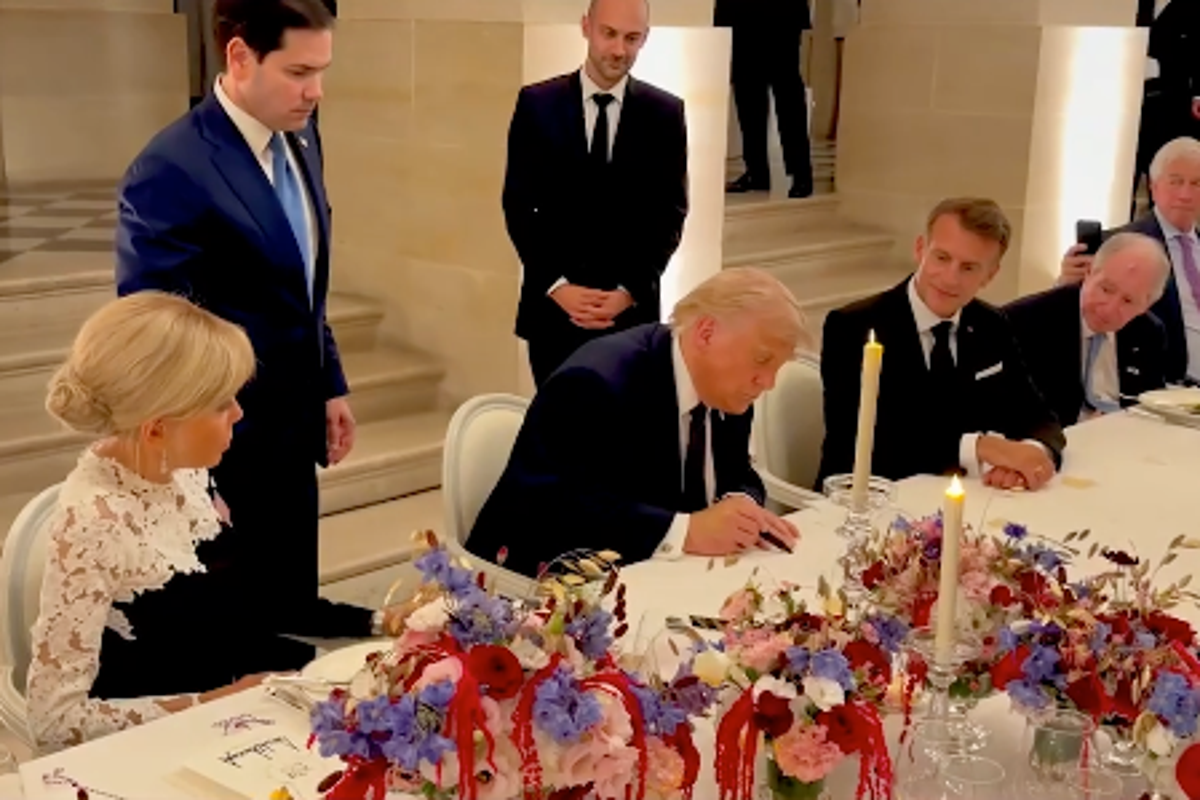
President Donald Trump signed what he called the Iran peace deal inside the gilded halls of the Palace of Versailles — a venue steeped in history, where the treaty ending World War I was signed in 1919. But the signing was a surprise, and even his former national security advisor, John Bolton, has said Trump was “not happy with terms” of the agreement.
The Iran deal, formally known as the Joint Comprehensive Plan of Action (JCPOA), is an international agreement that restricts Iran’s nuclear programme in exchange for lifting economic sanctions. It was originally signed in 2015 between Iran and the P5+1 (the US, UK, France, Russia, China, and Germany). The deal limits Iran’s uranium enrichment and stockpiles, and allows inspections by the International Atomic Energy Agency. President Trump withdrew the US from the JCPOA in 2018, but his administration has since pursued a new agreement. On 17 June 2026, Trump signed a new version of the deal at Versailles, though details remain sparse. Critics, including Bolton, argue the terms are insufficient, and Trump has attacked skeptics who want a “more comprehensive” deal, warning that continuing the war could lead to an “international depression.”
“Explains the Iran nuclear deal, its history, and why it matters for UK readers.”
The original JCPOA was created after years of negotiations to prevent Iran from developing nuclear weapons without permanently dismantling its programme. Iran had faced mounting sanctions, and the deal was seen as a diplomatic breakthrough. However, Trump criticised it as “the worst deal ever” and withdrew, reimposing sanctions. Iran then began exceeding enrichment limits. The new deal — signed by Trump and French President Emmanuel Macron at Versailles — aims to restart restrictions, but questions remain about its exact terms and verification measures.
For UK readers, the Iran deal matters because Britain is a signatory and has key diplomatic and economic interests. A nuclear-armed Iran would destabilise the Middle East, potentially triggering a regional arms race and increasing the risk of conflict that could draw in UK forces. The deal also affects oil prices and the UK’s energy market. Moreover, the Palace of Versailles signing underscores the UK’s involvement through the original JCPOA and its ongoing role in international diplomacy.
Q: What exactly is the Iran nuclear deal? It is an international agreement that limits Iran’s nuclear activities to prevent it from developing nuclear weapons, in exchange for lifting economic sanctions. The original deal was the Joint Comprehensive Plan of Action (JCPOA), signed in 2015.
Q: Why did Trump withdraw from the old deal? President Trump argued the JCPOA was too weak because it didn’t address Iran’s ballistic missile programme or regional activities, and because its restrictions on enrichment had expiration dates. He said it was “the worst deal ever” and reimposed US sanctions in 2018.
Q: What is different about the new deal signed at Versailles? The exact terms of the new deal have not been made public. According to reports, Trump “not happy with terms” according to John Bolton, and he has attacked critics who want a more comprehensive deal. It was signed as a surprise during a tour of the palace.
What happens next? The new deal must be implemented and verified. Critics like Bolton question its effectiveness. Trump has warned that continuing the war (likely referring to tensions with Iran) could cause an “international depression.” The UK and other signatories will watch closely as details emerge.