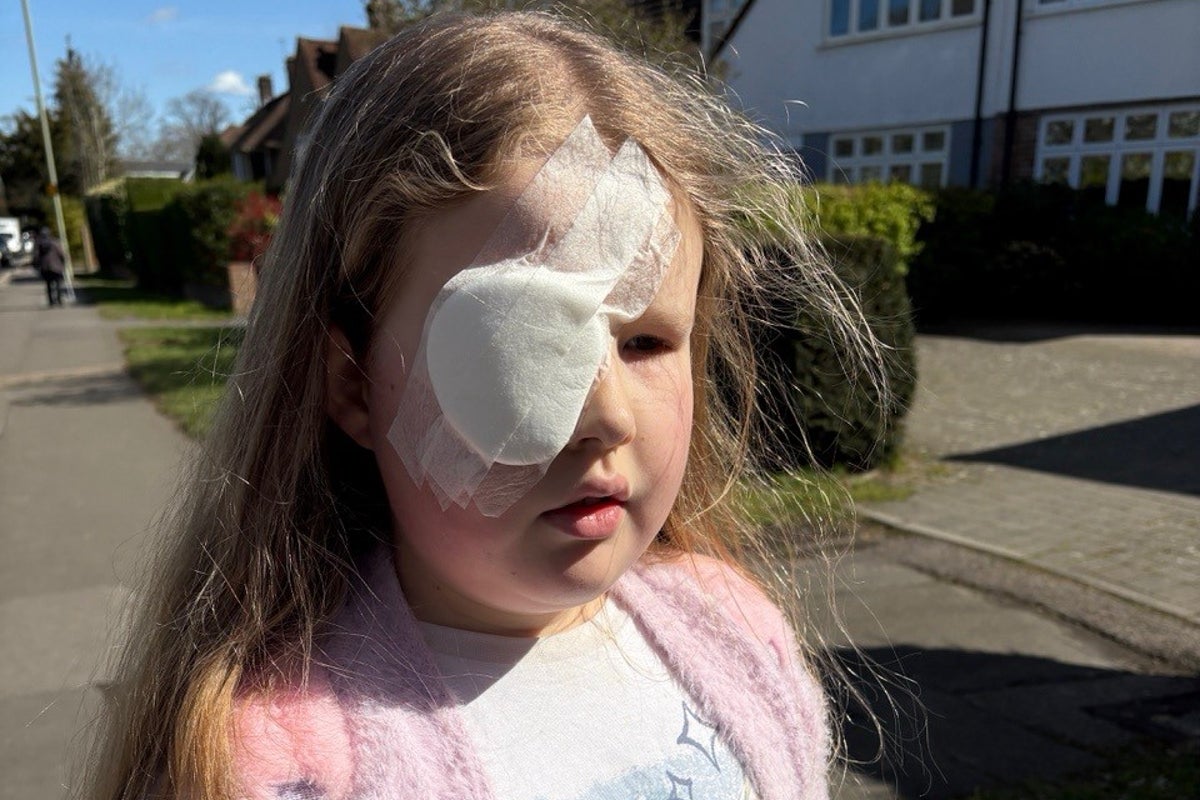
An 11-year-old girl from London has become the first patient in the UK to receive a groundbreaking gene therapy for a rare condition that progressively robs children of their sight.
Catherine L’Estrange, from North Acton, hopes the innovative treatment will allow her to continue one of her favourite hobbies – reading books. The hour-long procedure, using gene therapy developed by biotechnology company MeiraGTx, was carried out at St Helier Hospital in March.
“London girl Catherine L’Estrange, 11, becomes first UK patient to receive gene therapy for rare blindness-causing condition BBS.”
Surgeons removed the jelly inside her eye and injected healthy copies of a gene into the retina, the light-sensitive layer of tissue at the back of the eye. In people with Bardet-Biedl syndrome (BBS), small cells in the retina die, leading to blindness. Catherine was diagnosed with BBS as a baby.
“By giving a healthy copy of the gene, it helps save those cells, and the hope is to either stabilise or improve vision,” said Neruban Kumaran, consultant eye surgeon at Epsom and St Helier University Hospitals NHS Trust. This pioneering procedure had only been performed on one other individual globally prior to Catherine’s operation.
BBS is caused by mutations in one of 20 different genes, affecting approximately one in 100,000 births in the UK. Patients typically experience blindness by their late teens or early twenties. Beyond vision loss, the condition can also manifest with kidney problems, learning difficulties, obesity, and occasionally extra fingers or toes.
Catherine said: “If this treatment works, it will help me to carry on seeing things around me, and most of all I will be able to carry on reading books, which is one of my favourite things to do.”
Her father, Reverend Timothy L’Estrange, said most children with BBS do not get diagnosed until they are in primary school, but Catherine was diagnosed at a few weeks old, allowing the family to plan her future. “Our policy was to develop her independence and resilience as much as possible, ready for the inevitable loss of her sight, which began with her becoming night-blind, then colour-blind, and continued with her losing her peripheral vision,” he said.
“We were told that possible gene therapy was many, many years away, and was likely to arrive after Catherine had entirely lost her sight – so we were surprised and delighted when we learned this treatment had become available, and that Catherine would be one of the first patients in the world to receive it.”
Just one of Catherine’s eyes has been treated so far. If successful, the therapy could stabilise her vision or even lead to an improvement, according to her surgeon.