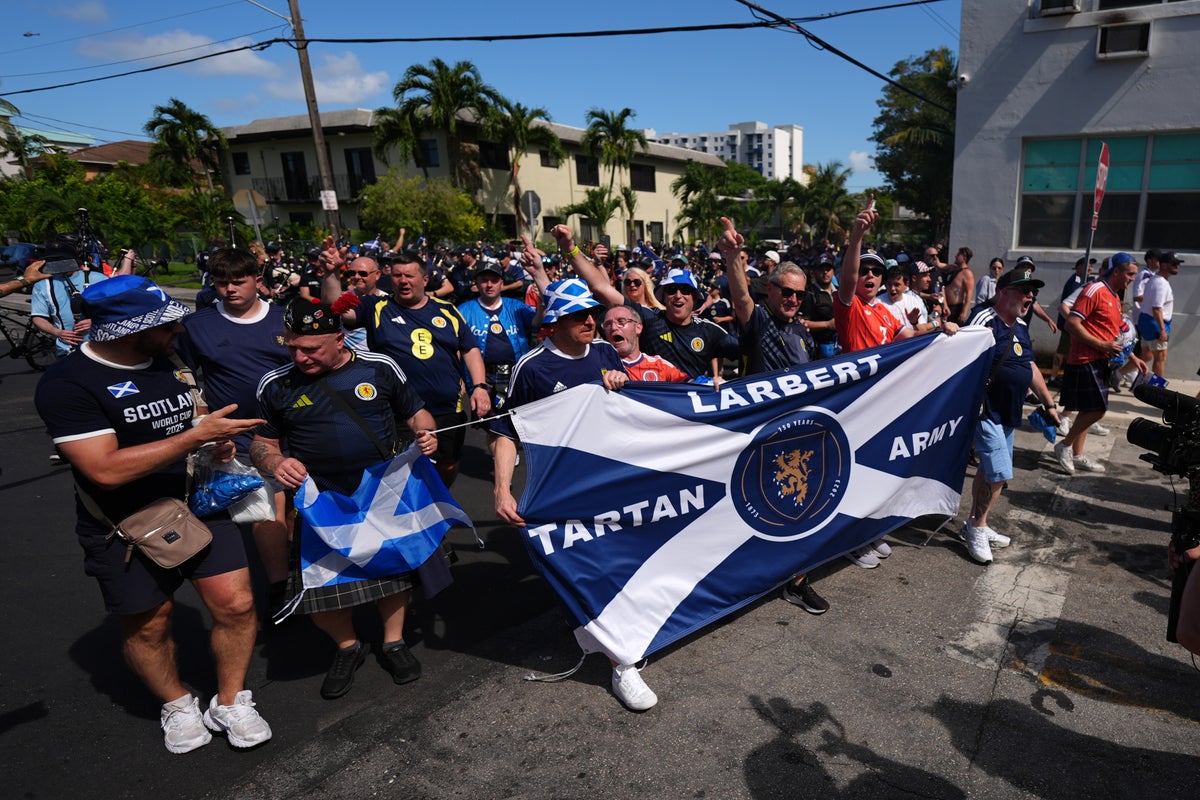
In Miami, a Scottish fan dressed a dancing robot in a kilt and balanced a traffic cone on its head, while in Boston, the Tartan Army sang so loudly that locals paused to watch. This is the Tartan Army — the collective name for Scotland's football supporters, who have turned the 2026 World Cup in the United States into a roving, joyful invasion of bars, ballparks and city streets.
The Tartan Army is the nickname for Scotland's national football team supporters, known for their colourful, loud and generally good-natured partying. At the 2026 World Cup, they have travelled in large numbers to follow Steve Clarke's side. The team played its first two group matches in Boston — a 1–0 win over Haiti and a 1–0 loss to Morocco — before heading to Miami for a decisive Group C finale against Brazil. Wherever they go, the fans bring bagpipes, songs and a tradition of placing traffic cones on statues' heads, a prank that dates back to the 1980s.
“Scotland's Tartan Army fans explained: their World Cup party, traditions, and why they matter.”
This fan culture has deep roots. Scottish football supporters have long enjoyed a reputation for friendliness and humour, distinct from the hooliganism that plagued other nations in the 1970s and '80s. The cone-on-statue tradition is thought to have started in 1980, when fans placed a cone on the head of a statue of Sir Walter Scott in Edinburgh. It has since become a signature act of playful rebellion, repeated at home and abroad. The Tartan Army's 2026 US tour has seen them march through Boston's streets and into Fenway Park, turn train stations into singalongs, and even exhaust local beer supplies — England fans arriving in Boston after Scotland's departure reportedly found the city's bars almost dry.
For UK readers, the Tartan Army matters because it shapes how Scotland is seen on the world stage. The fans are often described as unofficial ambassadors, promoting a warm, quirky image of the country. Their antics win widespread affection: the Boston Globe published an emotional farewell editorial, thanking them for 'the laughter, the bagpipes, and the memories.' At a time when football fandom can be divisive, the Tartan Army offers a model of passionate but peaceful support. Their behaviour also generates significant economic impact for host cities, filling bars, hotels and stadiums.
Q: What is the Tartan Army? A: The Tartan Army is the nickname for supporters of the Scotland national football team. They are known for their boisterous but good-natured partying, which includes singing, bagpipes, and dressing up in kilts and other Scottish regalia.
Q: Why do Scottish fans put traffic cones on statues? A: The traffic cone prank began in the early 1980s, when fans placed a cone on a statue of Sir Walter Scott in Edinburgh. It has since become a recurring joke, seen as a harmless act of mischief that adds to the festive atmosphere.
Q: Are the Tartan Army considered trouble-makers? A: No, they have a reputation for being among the most friendly and good-humoured fans in international football. While they are loud and often drunk, incidents of violence or serious disorder are rare, which has earned them praise from host cities and authorities.
What happens next is uncertain. Scotland must beat Brazil in Miami to advance to the knockout stages, or they could be eliminated. Win or lose, the Tartan Army will likely continue their celebrations — or commiserations — in characteristic style. But the party they brought to Boston and Miami will be remembered for years, as the locals who hosted them can attest.