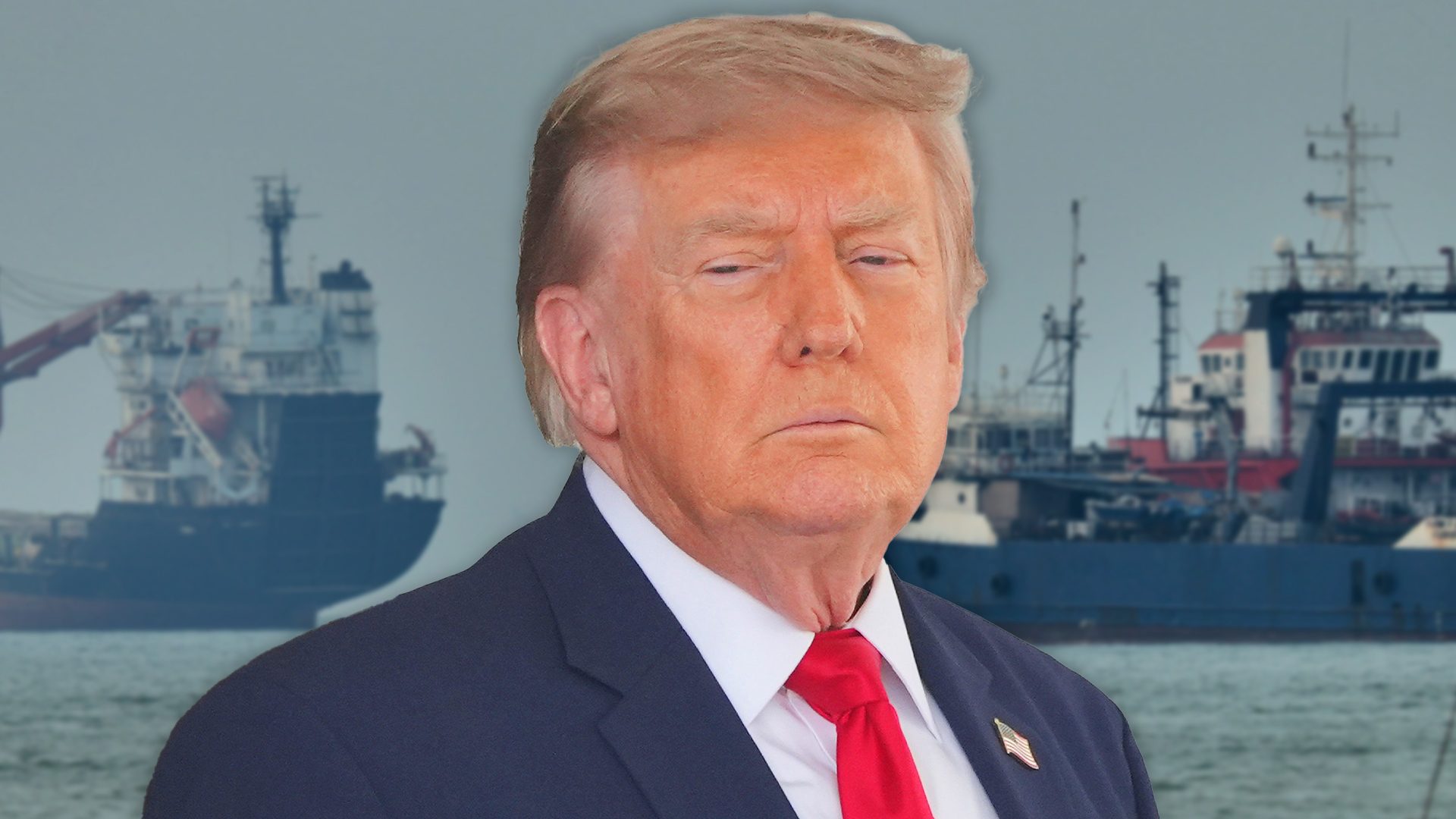
President Donald Trump has abruptly reversed his threat to impose a 20% fee on all cargo ships using the Strait of Hormuz, replacing it with promises of “massive” trade and investment deals with Gulf states – even as US and Iranian forces traded fresh strikes across the region.
Trump announced the U-turn on Truth Social just hours before the US resumed its naval blockade of Iranian ports, escalating a conflict that has already seen multiple nights of American airstrikes and Iranian retaliation. US Central Command said it had launched “an additional round of strikes against Iran to continue degrading Iranian capabilities used to attack commercial shipping” in the strategic waterway, following a third night of attacks earlier. Iran’s state media reported blasts in multiple cities, including Bushehr, home to a nuclear power plant, while Tehran said it had targeted US military facilities in Bahrain and Jordan after earlier hitting two United Arab Emirates tankers.
“Trump scrapped 20% fee on Strait of Hormuz cargo as US resumes blockade and strikes with Iran continue.”
The reversal came only 24 hours after Trump declared the US the new “guardian” of the Strait and vowed to charge shipping companies 20% to pay for its protection. In his latest post, he wrote: “I have decided to replace the 20% United States Reimbursement Fee with Trade and Investment Deals that the various Gulf States will be making into the United States. Those Investments will be MASSIVE but, at the same time, extraordinarily good for them, and their future.” He provided no further details. Trump also said the strait “is open to ALL Ship traffic except for Iran” and that “oil is flowing like never before, thanks to the awesome Power of the United States Military.”
Speaking later after talks in Washington with Iraqi Prime Minister Ali al-Zaidi, Trump said: “I don’t like the concept of a fee, but at the same time, it’s not fair that we’re protecting this Strait for the entire world.” He said he had changed his mind after receiving numerous calls from Gulf leaders.
Iran immediately pushed back. Deputy Foreign Minister Kazem Gharibabadi said Iran would remain in control of the Strait of Hormuz. The confrontation has underscored the waterway’s strategic importance – and drawn Trump into a conflict that has already prompted him to tell the US Congress that war has resumed, according to Channel 4 News. A memorandum of understanding that was meant to end the conflict appears to have failed, as the two sides remain locked in a cycle of strikes and counter-strikes that have driven oil prices sharply higher and virtually stalled tanker traffic through the strait.