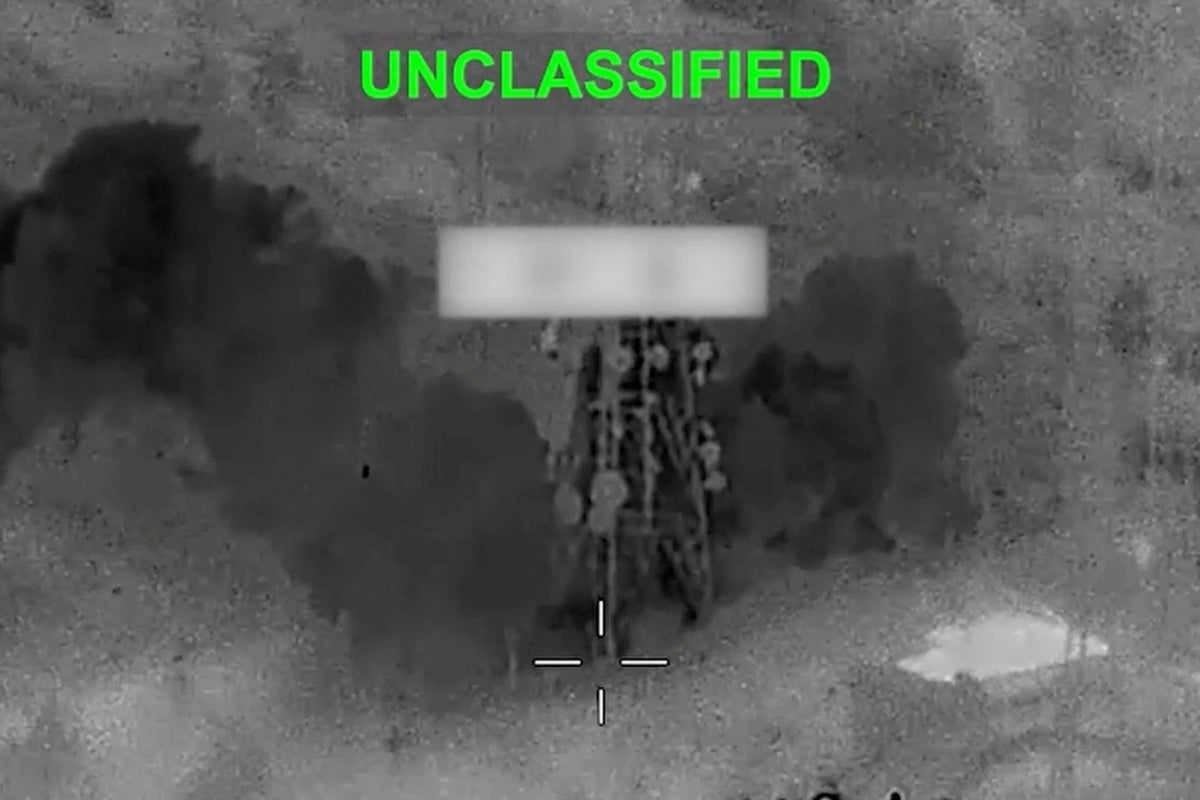
Just before dawn, the bridges began to fall. One by one, American missiles reduced them to crumpled concrete, strewn across river beds and gorges, as the US military severed the transport arteries connecting Iran's key southern ports to the rest of the country. Within hours, Bandar Abbas – a city of 500,000 where roughly half the nation's trade comes ashore – was almost completely isolated.
The strikes came as the US and Iran exchanged attacks on Saturday, the seventh straight night of American bombing aimed at Iranian sites. Iran responded by unleashing strikes on Kuwait, Bahrain and Jordan, where at least two US service members were killed in action defending against Iranian ballistic missile and drone attacks, the US Central Command said. US defence secretary Pete Hegseth wrote on social media platform X: “Godspeed, heroes.”
“Two US service members killed in Jordan as Iran's supreme leader warns of 'unforgettable lessons' and US cuts off key port city Bandar Abbas.”
The US Central Command said its strikes had hit “surveillance sites, military logistics infrastructure, underground weapons storage, and maritime capabilities.” Meanwhile, in a statement attributed to Mojtaba Khamenei, the supreme leader – still unseen since the war began – warned of “unforgettable lessons” if the United States kept attacking the Islamic Republic. The statement was read out on state television hours after an Iranian negotiator said Tehran was suspending its commitments to the interim deal signed about a month ago.
The collapse of that ceasefire leaves no clear end in sight for a conflict the US and Israel began more than four months ago. The battle now increasingly focuses on control of the Strait of Hormuz, and Michael Rubin, a former Pentagon official, said the Trump administration was becoming convinced that cutting off Bandar Abbas was key to reopening the vital sea passage. “There's a growing sense, a growing conclusion inside the Pentagon, that whether the United States wants to do this or not, they really have no choice if they want this to end,” he said.
Bandar Abbas's Shahid Rajaee port handles close to half of all Iranian trade – industrial machinery, construction materials, agricultural supplies, consumer goods, steel, fertilisers, and petroleum products. The bombing targeted corridors west and north of the city, damaging at least five bridges, including the Gariveh bridge on the Bandar Abbas–Khamir–Lar route, and crossings near Latidan, Kahorestan, Bandar Khamir–Keshar, and Maro village. The railway was also hit about six miles west of the city, wounding two people and forcing passengers onto intercity bus replacements.
The US government has warned Americans abroad to “exercise increased caution” due to the renewed conflict. In a post on X, the US department of state for consular affairs said Americans “worldwide, and especially in the Middle East” should be on alert, adding: “Flight cancellations and periodic airspace closures may cause travel disruptions.”
As emergency workers began the rebuild, authorities pleaded with residents to stay off the roads and follow only official news. The tactic of bombing rail and road links was used by Saddam Hussein against Iran in the 1980s, and now, with the roads broken and the railway severed, a city that helps feed some 90 million people sits cut off from the country it sustains.