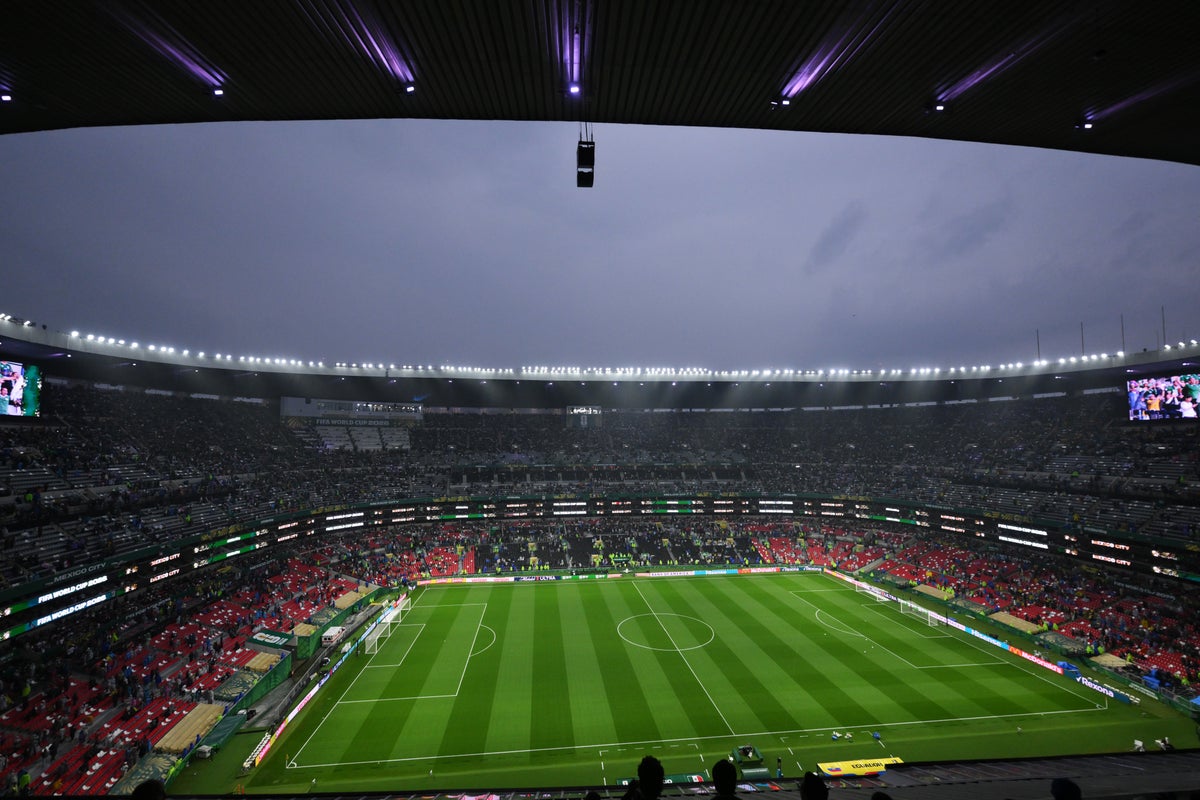
The Azteca Stadium in Mexico City looms over the England team not only as a venue but as a character in its own right – a place where thin air, thunderous noise, and decades of football history converge. As Thomas Tuchel's side prepares for a last-16 match against co-hosts Mexico, they face obstacles far beyond the 11 men in green shirts: altitude measured at 2,240 metres above sea level, forecasts of thunderstorms that caused confusion over the kick-off time, and a stadium where Mexico have won 70 of their 89 matches, losing just twice.
At its simplest, this is a football match in extreme conditions. The Azteca sits at 2,240 metres, more than half the height of Mount Snowdon. For players accustomed to sea level, that means less oxygen reaches the muscles and brain, making every sprint more exhausting and every decision harder. England’s build-up has been dominated by talk of adapting to the thin air, alongside the logistical headache of a kick-off time that – after a day of confusion over storm fears – settled at 1am British time. Harry Kane told fans he would love nothing more than “celebrating as the sun’s rising at 5,6am,” but the early hour has already sparked debate about whether pubs should stay open and whether children should be allowed to stay up.
“England face Mexico in a World Cup last-16 tie at high altitude – here's why the Azteca stadium and altitude are key challenges.”
This is not an isolated event. The impact of altitude on football has been debated for decades, with teams from lowland countries often struggling in Bolivia, Ecuador, and the highlands of Mexico. The Azteca itself has seen more iconic moments than any other football ground: Pelé and Diego Maradona reached mythic peaks there, and England were subjected to its most infamous moment – the “Hand of God” goal by Maradona in 1986. Tuchel has spoken of “karmic retribution” and called the fixture “beautiful,” but also admitted the stress of playing “against the whole country, the energy of the whole country in their stadium.”
For UK readers, the practical impact is immediate: a 1am kick-off means rearranging sleep patterns, and the BBC is offering a spoiler-free replay for those who choose not to watch live. But beyond the inconvenience, the match raises deeper questions about fairness in international football. Should teams be required to play at extreme altitudes? FIFA’s rules allow venues up to 3,000 metres, and Mexico’s home record suggests a significant advantage – they have scored eight goals and conceded none in their four group matches. England, for their part, have struggled with consistency, needing Harry Kane to bail them out against DR Congo in the previous round.
Q: How does altitude affect football players? At 2,240 metres, the air contains roughly 23% less oxygen than at sea level. Players breathe harder, tire quicker, and may experience headaches or nausea. Teams often arrive days early to acclimatise, and managers adjust tactics to reduce high-intensity running in the first half.
Q: Why is the Azteca stadium so significant? The Azteca has hosted two World Cup finals (1970 and 1986) and is the only stadium to have seen both Pelé and Maradona win the trophy. It is also where Maradona scored the “Hand of God” goal against England in 1986, a moment that still resonates for English fans.
Q: What is England's record at the Azteca? England have played at the Azteca before, most famously in the 1986 quarter-final when they lost 2-1 to Argentina. Mexico’s overall home record at the stadium is formidable: 70 wins in 89 matches, with just two defeats.
What happens next is a single knockout match. The winner faces either Brazil or Norway in the quarter-finals. For England, this is the toughest test of the tournament so far – not just because of the opponent, but because of the environment. As Tuchel put it, “We don’t need anything extra in these stages, but just trust and belief in ourselves.” Whether that is enough against a nation that breathes the thin air every day remains to be seen.