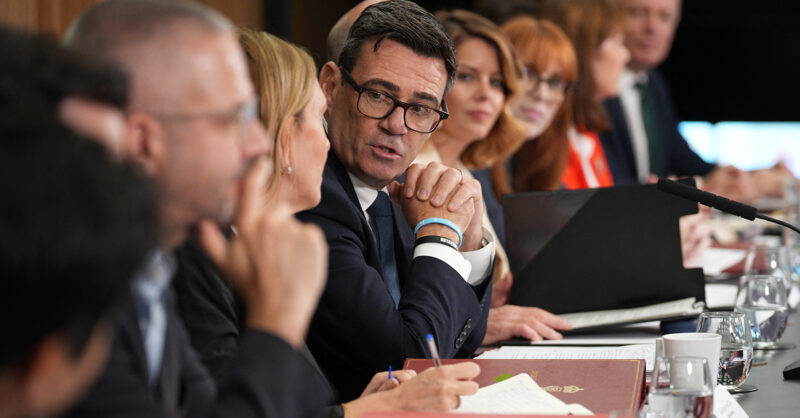
It’s not the despair, Laura – it’s the hope I can’t stand. That line, from the 1986 film *Clockwise*, is what LBC presenter James O'Brien finds himself thinking every time Andy Burnham opens his mouth. And after less than two weeks in power, the Prime Minister has given the country plenty to hope for.
Within days of entering Downing Street, Burnham had already made his first major promise: an end to rough sleeping. It was a pledge that resonated far beyond the vulnerable individuals it would directly help. The return of street homelessness – a crisis largely eradicated by the last Labour government – is a visible symptom of national decline, and if Burnham can end it, the streets will feel safer and the country more prosperous.
“Andy Burnham's early promises include VAT cuts, bus fare caps, and a pledge to end rough sleeping.”
Then came a flurry of announcements that left the *Today* programme scrambling to rethink its agenda. VAT on electricity bills is to be cut. Bus fares will be capped. More tax relief is aimed at pubs and music venues. Business rates for much of the beleaguered hospitality industry will be reduced. Social care reform – described as the biggest block to local government – is on the table. And there are plans to help the legions of young people currently being failed by the education system.
None of these are huge measures in themselves, the New Statesman notes, but together they paint a picture of a government actively engaged in trying to make life better. The inevitable vox pops suggest the great British public is exactly as grateful for this effort as one would imagine.
Crucially, Burnham has managed this without what O'Brien calls “dangerously and dishonestly attributing their problems and grievances to immigration.” The retention of Shabana Mahmood at the Home Office and Bridget Phillipson in the equalities brief signals no change of direction on social issues – treating immigrants like human beings and upholding trans rights – that had done so much damage under the previous Labour leader.
There is also, less seriously but no less importantly in electoral terms, the basic approachability that is seeing him reach parts that most Labour politicians have historically failed to reach. One clip, where he and Chancellor John Healey rank their favourite pub snacks, took seconds to drive home what Keir Starmer so signally lacked: normality, the common touch, being recognisably human. “Who knew that a scampi fry could make such a profound contribution to political discourse?” O'Brien writes.
The most essential element of this early success is the recognition of epic national imbalance across the UK. When campaigning in Makerfield, Burnham said of the Labour Party that “the London set have run it for too long”. A branch office for the Prime Minister and Cabinet – No 10 North – is already up and running in Manchester.
But some observers remain wary. The take from the right is that Burnham is an old-style tax-and-spend leftie who will lead the country to ruin. Others dismiss it as just Starmerism with better comms. And all of this is vulnerable to accusations of gimmickry or tinkering at the edges of problems that deserve bigger, more decisive action. Those accusations will only grow as more flesh appears on the bones of “Burnhamism”.
Yet after well under a fortnight in power, the Prime Minister has achieved something that will be almost impossible to undo. He has established that he recognises and inhabits the world that many voters feel is alien to the so-called political – or, indeed, media – class. And for those disturbed by the rise in populism and far-right propaganda, that recognition offers a rare, painful hope.