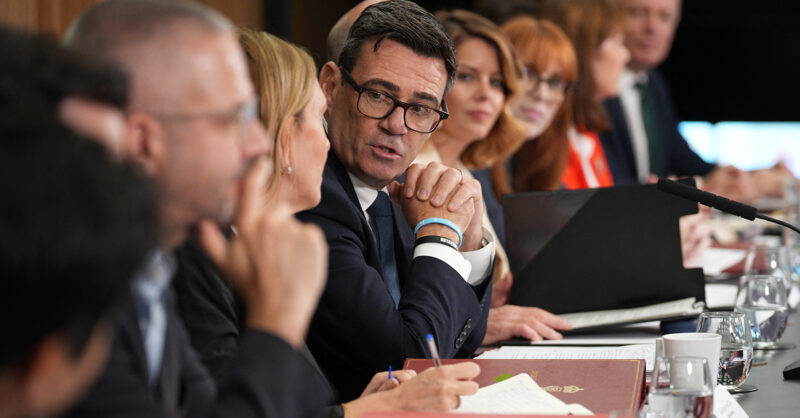
The hope is almost unbearable. That's the feeling, as one commentator put it, watching Andy Burnham's first weeks as Prime Minister – a sharp contrast to the despair of the previous government. After two years of a Labour leader who seemed to think everything was fine, Burnham has burst onto the scene with a flurry of promises: VAT cut from electricity bills, capped bus fares, tax relief for pubs and music venues, an end to rough sleeping, and social care reform. This is the early shape of what some are calling "Burnhamism": a political approach that looks like a genuine departure from the Starmer years, combining old-fashioned tax-and-spend leftism with a relentless drive to announce things. But what exactly is it, and why should UK readers care?
The basics: Andy Burnham became Prime Minister in July 2026 after a leadership contest. He quickly established a new style, including a branch office for the Prime Minister and Cabinet in Manchester called "No 10 North". His early announcements include a VAT cut from electricity bills, a cap on bus fares, and a vow to end rough sleeping – a crisis he notes was largely eradicated by the last Labour government in the 2000s. He has also signalled a sincere enthusiasm for devolution and plans to spend political capital on social care reform. His team retains key figures like Shabana Mahmood at the Home Office and Bridget Phillipson in the equalities brief, suggesting continuity on social issues such as treating immigrants humanely and trans rights. But in other areas, Burnham is pushing a more significant departure from his predecessor.
“What is Burnhamism? Andy Burnham's early moves as PM explained.”
Why this issue exists: The context is the failure of the previous government to address deep national imbalances. Burnham has said "the London set have run it for too long" and his moves are partly a response to the feeling that politics is alien to many voters. The "broken windows" theory is invoked: visible signs of disorder like rough sleeping give permission for other anti-social behaviour. Burnham's focus on these tangible problems aims to restore faith that government can make things better. His approachability and facility with social media – including a viral clip ranking favourite pub snacks with his Chancellor – are seen as a deliberate contrast to the perceived aloofness of the political class.
Why it matters for UK readers: These early policies directly affect household finances. A VAT cut on electricity bills lowers energy costs; bus fare caps reduce transport expenses; tax relief for pubs and music venues supports local hospitality. But bigger structural changes are promised: social care reform, long a political graveyard, could transform local government. The end to rough sleeping would make streets feel safer and signal national renewal. For voters disillusioned with politics, Burnham's style – being recognisably human and not blaming immigration for problems – offers an alternative to populism. The question is whether these small measures add up to real change.
Q: What is Burnhamism? Burnhamism is the emerging political approach of Prime Minister Andy Burnham, characterised by a visible determination to announce and implement policies that improve daily life – such as VAT cuts on electricity and bus fare caps – combined with a focus on devolution, social care reform, and a more relatable public persona than his predecessor, Keir Starmer.
Q: Why is Andy Burnham focusing on rough sleeping? Rough sleeping is seen as a "horribly visible symptom of national decline". Burnham promised to end it before even entering Downing Street. The return of rough sleeping, which was largely eradicated by the last Labour government, is both a moral stain and, according to the "broken windows" theory, a spark for wider anti-social behaviour. Ending it would symbolise that government can still make things better.
Q: What is No 10 North? No 10 North is a branch office for the Prime Minister and Cabinet, set up in Manchester. It symbolises Burnham's commitment to devolution and his belief that "the London set have run it for too long". It is intended to bring government closer to regions outside the capital.
What happens next: More flesh will appear on the bones of Burnhamism as further policies are announced. Social care reform, a major block to local government's ability to govern, is a key pledge. Critics will watch for whether these early moves are gimmicks or the start of genuine change. The public's hope, as one commentator noted, is that things can and will get better – but that hope itself is a fragile thing.