"We are on borrowed time if we don't get a move on," Angela Rayner, the former deputy prime minister now back in the cabinet as housing secretary, told the BBC's Today programme on Friday.
It has been quite the week at Westminster. Sir Keir Starmer's departure as prime minister on Monday seems rather a while ago. The fledgling Burnham administration has been seeking to find its feet and make a decent first impression at the same time.
“Burnham's first week sees piecemeal announcements and speculation over compulsory voting amendment.”
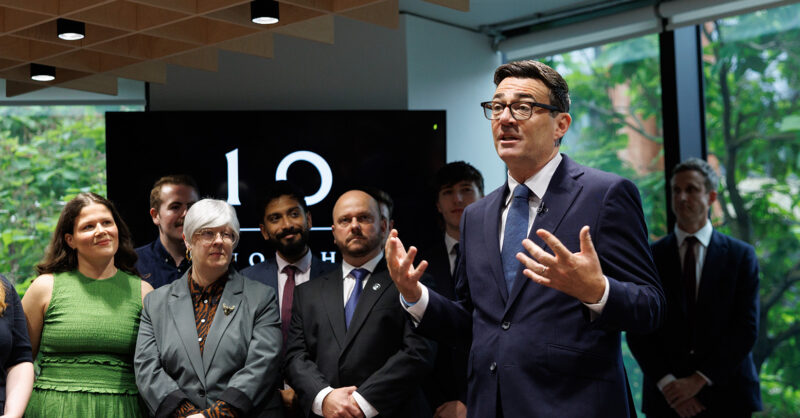
An early pattern emerged: an early morning nugget of news dropping from No10. On Thursday, it was business rates in England; on Wednesday, bus fares; on Tuesday, a VAT cut on electricity bills. Today, the prime minister is assembling what Rayner calls "a pride of mayors" for a meeting of the National Economic Council at the new No 10 North in Manchester.
Andy Burnham claims his new base represents the beginning of "the biggest rebalancing of power our country has seen" and he will be "bringing forward the biggest changes in the last 40 years". His early announcements have been considerably more piecemeal than that – he says his "10 year plan for Britain" will come later in the year.
Meanwhile, the third reading of the Representation of the People Bill, which would lower the voting age to 16 and tighten campaign finance rules, has been postponed until after parliament's summer recess. This has prompted speculation that Burnham might want to push the legislation further. Top of the amendment list is a call for a national commission on electoral reform, with nearly a third of MPs signed up. Less popular but more intriguing are two amendments from Labour MPs Antonia Bance and Bell Ribeiro-Addy on introducing a "compulsory duty to vote".
Proponents point to Australia, which introduced compulsory voting in 1924 and now enjoys turnout rates of 90 per cent. In contrast, turnout for the 2024 UK general election was below 60 per cent – which the Institute for Public Policy Research estimates falls to 53 per cent when unregistered eligible voters are included. According to the Constitutional Society's 2025 report Universal Suffrage?, turnout was significantly higher among voters who were white (by 13 percentage points), wealthy (22), older (34) and outright homeowners (36), compared with their ethnic minority, poor, younger and renting counterparts. The report argues: "Low and unequal turnout can no longer be seen as merely a symptom of democratic malaise, but must now be understood as a contributing factor – one that warps the incentives of the political class."
Burnham's opponents are having to recalibrate. The Conservative leader Kemi Badenoch's al fresco speech on a rooftop in central London on Thursday was a tacit acknowledgement that the political terms of trade have changed. She teased the new prime minister over his informal style – he "seems like a nice g…"
The early evidence points to Andy Burnham being both more sharp and more nimble than his predecessor in setting out what he is attempting to do. With the creation of the Office of Prime Minister and the establishment of No 10 North, he has made it clear that the arteries of power flow very much to and from him. He hopes he can overcome the critique that one of the frustrations of being prime minister can be pulling levers and nothing actually happens. Whether he will pull the lever on compulsory voting remains to be seen.