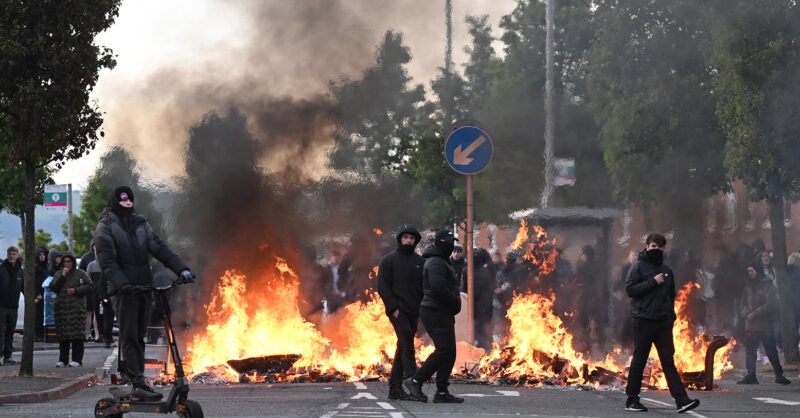
The fires that spread through Belfast on Tuesday night began not on the streets, but on social media. On Monday evening, footage of a horrific knife attack in North Belfast started circulating online. The perpetrator, a Sudanese man in his thirties who had been granted leave to remain in the United Kingdom, became the target of a coordinated far-right campaign. Tommy Robinson urged his followers to protest against this “invader attack”, posting a list of locations across the UK for demonstrations. Tech billionaire Elon Musk amplified the call, urging citizens to protest “repeatedly and loudly” to change government immigration policies. Restore Britain leader Rupert Lowe went further, pledging to support mass deportations and the reintroduction of the death penalty to prevent what he called atrocities committed by “barbarians”.
Meanwhile, anonymous WhatsApp messages circulated, calling on men aged 18 and over in Northern Ireland to “be prepared to fight or be arrested”. Dozens of young men answered the call. Police Service of Northern Ireland Chief Constable John Boucher urged the public not to be “duped into violent disorder” by people “inciting awful behaviour”. But the news that the suspect had been charged with attempted murder did little to quell tensions.
“Far-right activists exploited a knife attack in Belfast, leading to arson and racist violence across Northern Ireland.”
On Tuesday night, sporadic street protests erupted across the region at the times and locations listed by Robinson. Several vehicles were set on fire in east and north Belfast. Later, there were reported incidents of racist violence in towns including Ballyclare and Portadown, with arson attacks on homes and businesses owned by people of colour. More police officers deployed across Belfast ahead of further protests and unrest.
Northern Ireland has seen this playbook before. In August 2024, far‑right groups used online platforms to stoke agitation during the Southport riots, with hate speech and misinformation defining the unrest. Last June, after two Roma teenagers were charged with sexual assault in Ballymena, businesses and homes were attacked in violence the PSNI defined as “race‑motivated”. Some minority‑ethnic residents resorted to displaying union flags on their doors to avoid being targeted. Now, as then, the violence cannot be separated from the online world that spawned it.