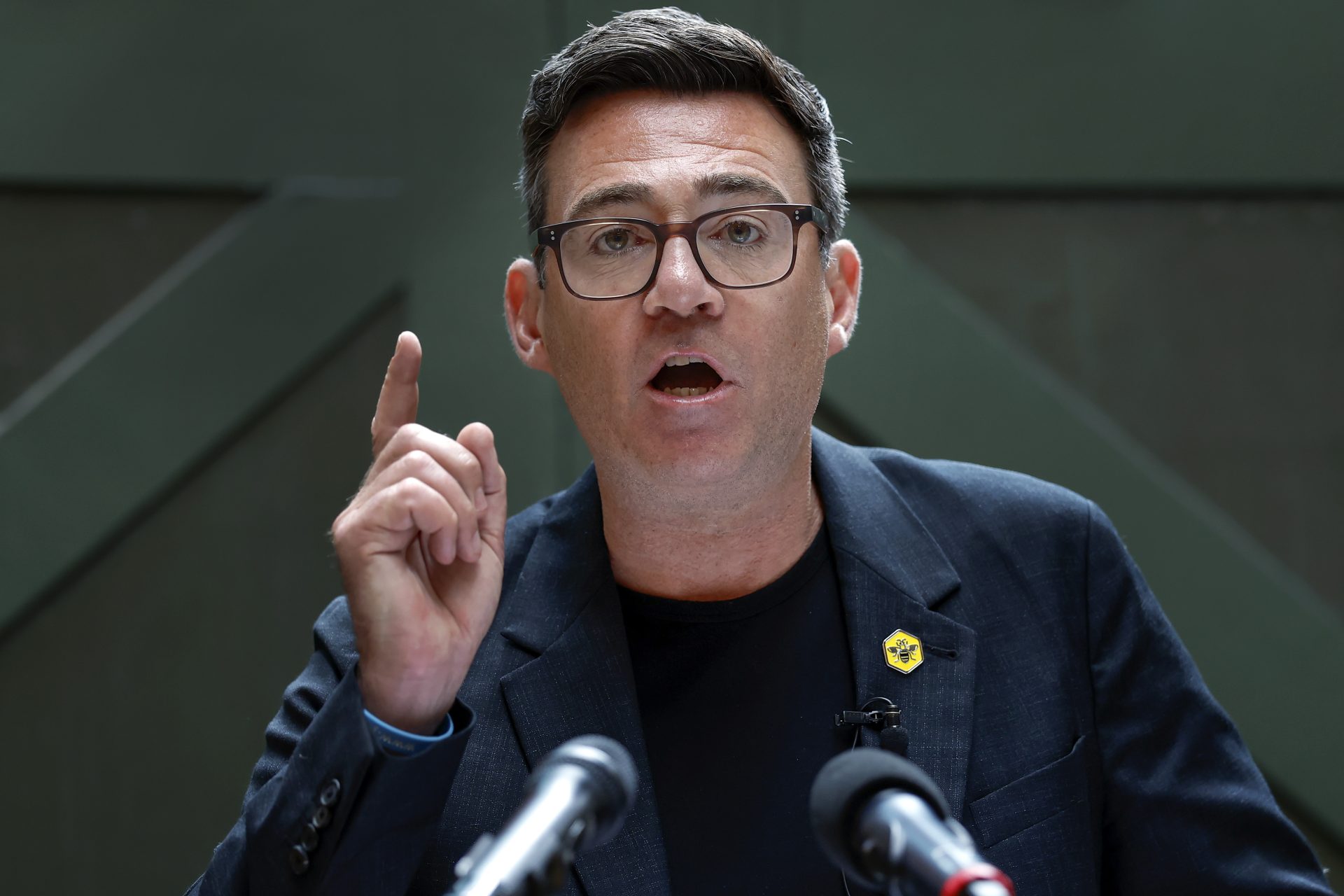
Nigel Farage has evolved into the dominant figure in British political life, around whom, in fear or expectation, all else revolves. That is the verdict of one analysis of the country’s volatile mood, as Labour’s internal coup to stave off an electoral revolution brings Andy Burnham to power. The Lancastrian usurper has secured his hold on Westminster, disbursing sinecures to his faithful retainers, yet there is no particular reason to believe he will be any more successful in office than his predecessor. After all, many who now celebrate his coup were just as feverishly exultant two years ago over the coming Starmerite golden age.
Burnham told us Westminster is “broken” in his landmark devolution speech, using language apparently no longer the preserve of Right-wing populists. His manifesto-by-proxy, *The Productive State*, aims to flesh out his much-invoked but nebulous Manchesterism as a programme for governance. The paper unabashedly adopts a “declinist” framework, stating that the public “ask now for only what is obvious: major, even fundamental changes in British society” to cast off “the meanness and frustration of long years of stagnation and decline.” It notes: “Labour have hitherto not delivered on that demand. If that feeling does not change, the electoral consequences will be severe…”
“Andy Burnham's postliberal devolution pitch and manifesto emerge as Team Burnham are already furious, Sky News reports.”
But even as Burnham stakes out this postliberal territory, Team Burnham are already furious, according to Sky News. The source of that fury is not specified, but it underscores the tensions within a party that has sacrificed yet another failed leader as an offering to a British public that has never before been in such a volatile and revolutionary mood. Summer ethnic riots, previously a generational shock, have rapidly become a routine problem of governance. The country is caught between the electorate’s desire for total change and Westminster’s inability to undertake reform – a consensus that the liberal centre now acknowledges as commonplace.
Burnham, not shy of exaggerated displays of cultural Northernness, now embodies the hope that reform can come from within. But whether he will be characterised as a continuity figure saving a failing system, or as an agent of total change, remains an open question. The next election will provide the answer.