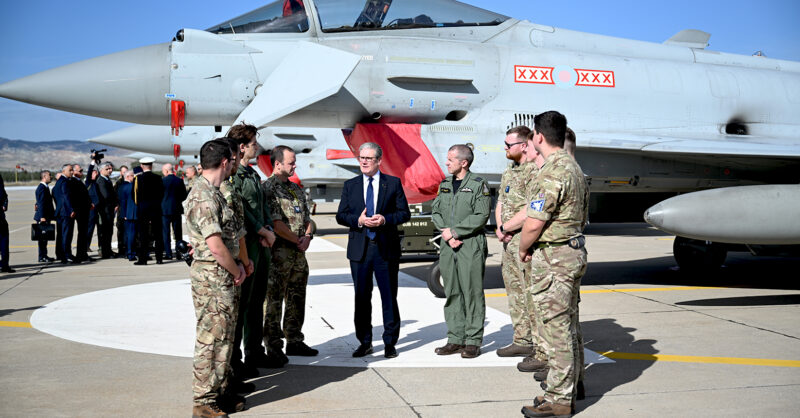
Keir Starmer’s authority has suffered a double blow after his defence secretary and armed forces minister resigned within hours, accusing the prime minister of failing to invest enough in the military.
John Healey quit as defence secretary, followed by armed forces minister Al Carns. Their charge: Starmer had not spent enough. The resignations landed with Starmer weakened and Rachel Reeves trapped inside her own fiscal rules.
“Defence secretary John Healey and minister Al Carns resign over military spending, weakening Starmer.”
Starmer spent years treating defence orthodoxy as a certificate of political seriousness. Nato first. Spending up. The generals reassured. The press pacified. Washington flattered. The left could be beaten with it; Labour made safe for empire. But a ratchet does not stop because a prime minister thinks it has served its purpose, or a chancellor worries about the bill. It tightens.
The proposed Defence Investment Plan would take military spending to 2.68 per cent of GDP by 2030. Healey wanted 3 per cent. NATO has already pushed the destination to 3.5 per cent on core defence and 5 per cent on defence and security by 2035. Yesterday’s proof of seriousness becomes today’s national humiliation.
The Strategic Defence Review was meant to supply a plan. It did not. It announced a “new era of threat”, “NATO first” and defence as an “engine for growth”. A serious strategy would begin with threats, risks and costs. The review gave rhetoric, not method.
European Nato states already spend far more than Russia: $559bn in 2025 against Russia’s $190bn. The United States is seeking military spending of $1.5 trillion a year. The problem is not a simple shortage of money. The Ministry of Defence is not a safe place to pour money. The 2023-2033 equipment plan is already £17bn in the red. The F-35 programme is worse. The National Audit Office found that the capability delivered for £11bn spent so far was a “disappointing return”; the full through-life cost may run to £70bn; the MoD initially claimed it would be £18bn. Britain pays, but the aircraft’s software, upgrades and operational architecture are, in effect, US-controlled. Even the Treasury, hardly an anti-militarist institution, is seeking greater control over the next-generation fighter jet programme with Japan and Italy.
The audience for the resignations was not only the residents of 10 and 11 Downing Street, but whoever may soon succeed them. Accept the ratchet, or be declared unserious.