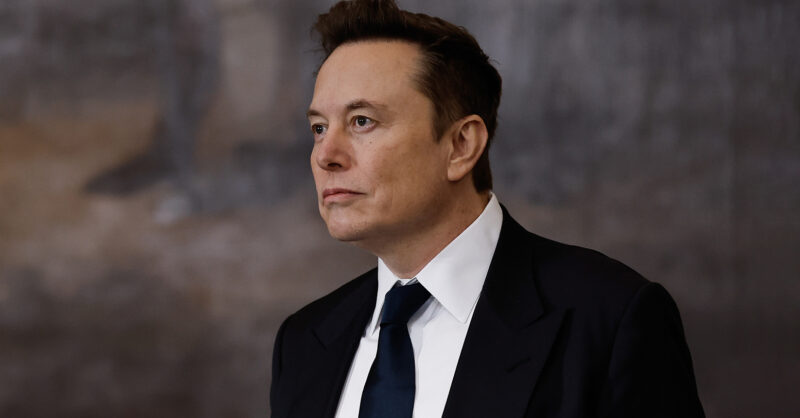
Later today, Elon Musk’s company SpaceX is expected to raise $75bn by selling shares in what may be the largest initial public offering in history. According to the prospectus, SpaceX is primarily an AI company, contains xAI, is also a social media company, and is nominally a rocket company that plans to build cities on other planets. But its real purpose, critics warn, is to draw your retirement savings inexorably towards it. On Friday, following SpaceX’s stock market debut, Musk became the world’s first trillionaire, according to Informa Connect Academy, which tracks the fortunes of the ultra-wealthy. “He’s a different type of billionaire,” says John Stringer, who runs a media channel called Tesla Owners of Silicon Valley. “Elon is literally working his butt off day in, day out.” Eric Mina, a YouTuber based in Scranton, Pennsylvania, adds: “He wants to be an interplanetary species and he’s actually going forward and doing it.”
But many in Britain are unhappy at the prospect of their pensions inflating Musk’s fortune. A Survation poll in December 2024 found that two thirds of UK voters – including a majority of Reform voters – believe Musk should not be influential in British politics. Yet shortly after SpaceX begins selling shares, it will be included in major stock market indices such as the Nasdaq 100 or the MSCI Global Equity Index. That matters because passive investing has become the norm for retirement savings: UK savers have more than £3 trillion invested in passive funds that simply track these indices. If SpaceX achieves its predicted valuation of $1.7 trillion, it will have a significant weight in many indices, meaning money from those funds will flow towards it automatically – whether you want it to or not. You are already indirectly invested in Musk through Tesla via index funds. The SpaceX prospectus, one observer notes, tells two stories: “one is wildly ambitious, and the other is insane.”
“SpaceX's record IPO will funnel UK pensions to Elon Musk, making him the world's first trillionaire despite public opposition.”