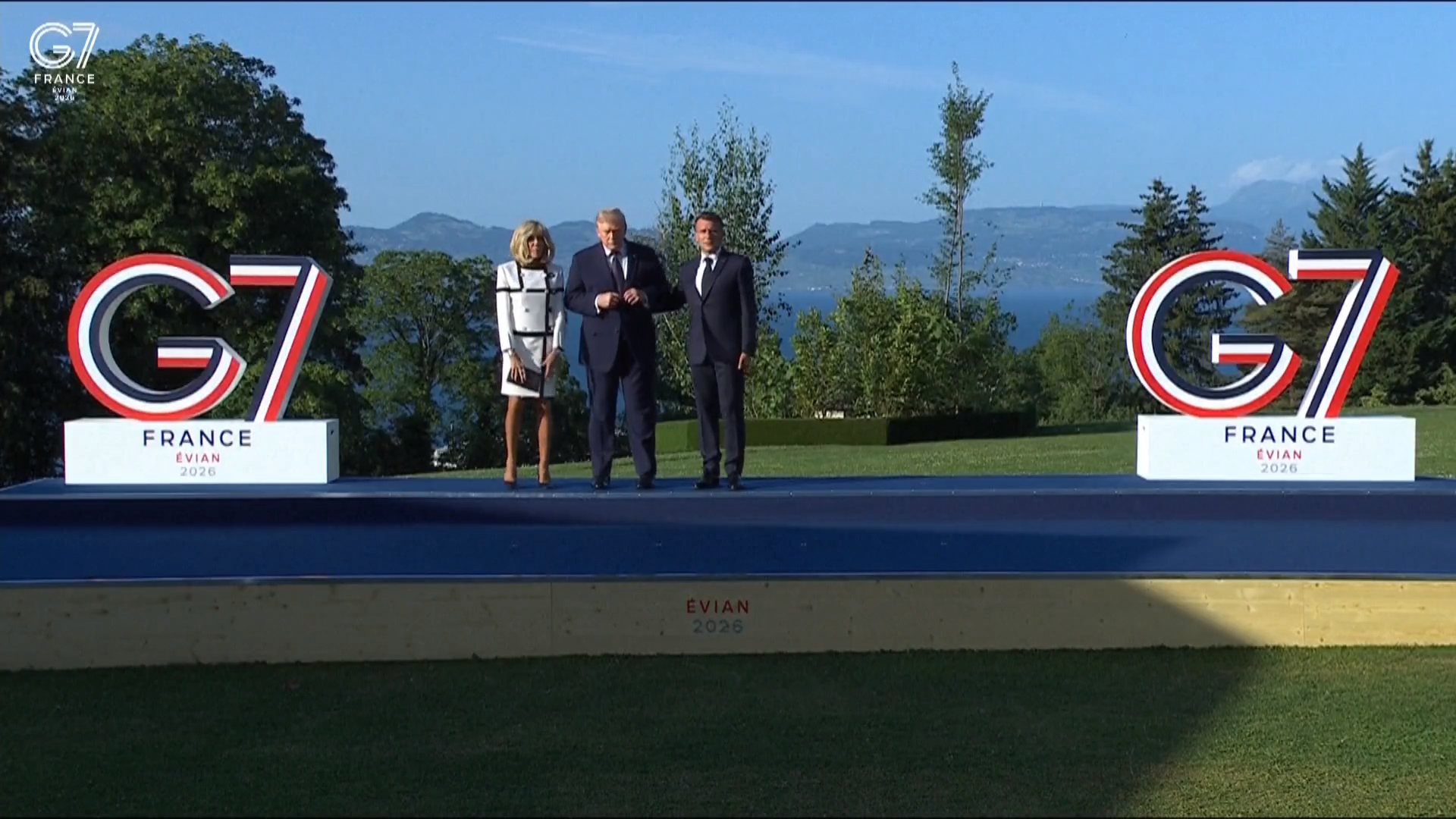
President Donald Trump arrived at the G7 summit in France able to say that an agreement has been reached with Iran, but the details remain unclear. “Let the oil flow,” Trump said, adding that the US naval blockade will end. The deal paves the way for further talks on critical details — a fragile opening as world leaders gather in Evian-les-Bains against a backdrop of technological tension and domestic unrest.
On Wednesday, EU leaders will lunch with the world’s top AI CEOs, including Anthropic’s Dario Amodei, OpenAI’s Sam Altman, DeepMind’s Demis Hassabis and Mistral’s Arthur Mensch. The meeting comes days after Washington suspended EU citizens’ access to Anthropic’s latest models — a move that triggered renewed calls for European digital sovereignty. Yet diplomats insist they are not on the warpath. “We are ready to engage and tackle these security risks together with our like-minded partners,” said European Commission spokesperson Thomas Regnier. One European diplomat added: “On the topic of frontier models, we should be able to create unity before the end of the G7. The question is to recreate confidence, we need to recreate a circle of trust.” Officially, the two-and-a-half-hour lunch will discuss AI’s role in economic growth and societal resilience, especially for young people. But according to one industry representative, the spat with Anthropic will be the “elephant in the room.” Anthropic confirmed Amodei’s attendance but declined further comment.
“Trump announces Iran deal at G7 as EU leaders meet AI CEOs after US blocks Anthropic models; Paris riot fears mount ahead of World Cup.”
Meanwhile, as France gears up for the World Cup — Les Bleus play Senegal in New York tonight — the French police are preparing for more street violence. Last month’s Champions League final between Arsenal and PSG triggered riots across France. Within minutes of the match ending, BFM news showed bins set alight, youths dancing on burning cars, shop windows smashed and shops looted. Bare-chested youths fired acid-filled bottles, fireworks and homemade mortars at police lines. The police had deployed 8,000 officers in central Paris and 14,000 more nationwide. There were 890 arrests — 45% more than the previous year — and 178 police officers injured, one badly burnt by a mortar firework and another run over by a stolen car. The violence spread beyond Paris: more than 71 cities, towns and villages reported “violent incidents” through the night. The rioters, known as casseurs — “wreckers” — are largely drawn from the banlieues, the marginalized suburbs where many Senegalese immigrants live. Senegal, a former French colony, has not experienced the bitter relations of North African possessions, but high unemployment and poverty among the Senegalese in France make them a central part of the banlieues’ discontent. As the World Cup begins, the question hangs over the G7: can France host a peaceful tournament?