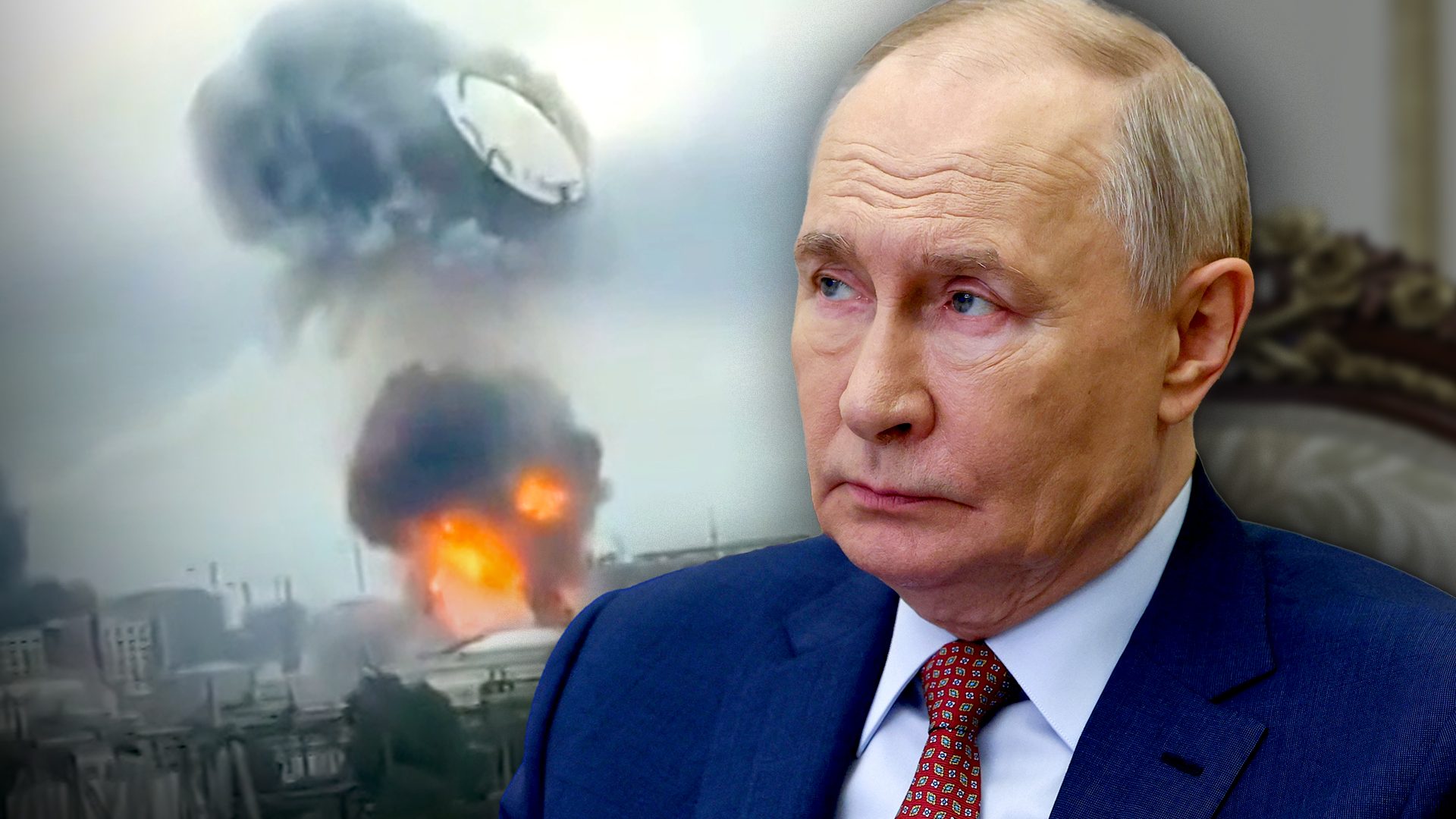
Moscow woke to apocalyptic skies on Thursday after what officials described as Ukraine’s largest ever drone attack on the Russian capital – a barrage that sent plumes of smoke billowing over the city and forced the evacuation of one of its busiest airports.
The assault came as Western allies gathered at the Ramstein group meeting in Germany, where the UK’s new Defence Secretary, Dan Jarvis, pledged an additional 150,000 drones, more than 350 air defence missiles and radar systems to Kyiv. The £750 million package, drawn from the UK’s £2.26 billion Extraordinary Revenue Acceleration loan funded by seized Russian assets, is intended to arrive by the end of the year.
“UK announces 150,000 drones for Ukraine after massive drone attack leaves Moscow choked with smoke.”
“Our support for Ukraine is steadfast,” said Chancellor Rachel Reeves. “I am proud that we are providing vital support, and we will continue to do all we can to keep pressure on Russia.”
Jarvis, who welcomed Ukrainian President Volodymyr Zelensky to a NATO meeting of defence ministers, described the aid as “this package of drones, air defence missiles and radars that will help to protect innocent Ukrainian people from Putin’s barrage of drones and missiles.”
The overnight strike on Moscow appeared designed to undermine Russia’s ability to finance its war. State media claimed Russia had shot down 992 drones, four long-range cruise missiles and ten aerial bombs in 24 hours. But Moscow Oil Refinery was repeatedly hit with explosives, and a massive fire broke out at the Sadovod Market, sending dark smoke across the city. Locals complained of “oil rain” falling on their cars and streets.
At Sheremetyevo Airport, north of Moscow, passengers and staff were evacuated from terminals and aircraft, forced to shelter in underground parking garages as flights were cancelled. Footage circulating on social media showed a man firing a pistol at a drone – a moment that underscored the strain on air defences.
Russian Foreign Minister Sergei Lavrov responded with a vow of retaliation. “After yet another Kyiv terrorist attack … we will now conduct massive group strikes on a regular basis against targets whose condition directly affects Ukraine’s combat readiness,” he said. “This is the only way to force the Kyiv regime to peace.”
The attack comes more than four years after Vladimir Putin launched his “special military operation” – a war that has now cost over a million casualties. As Moscow’s skies choked with smoke, the grim irony was not lost: Putin thought it would be over in days.