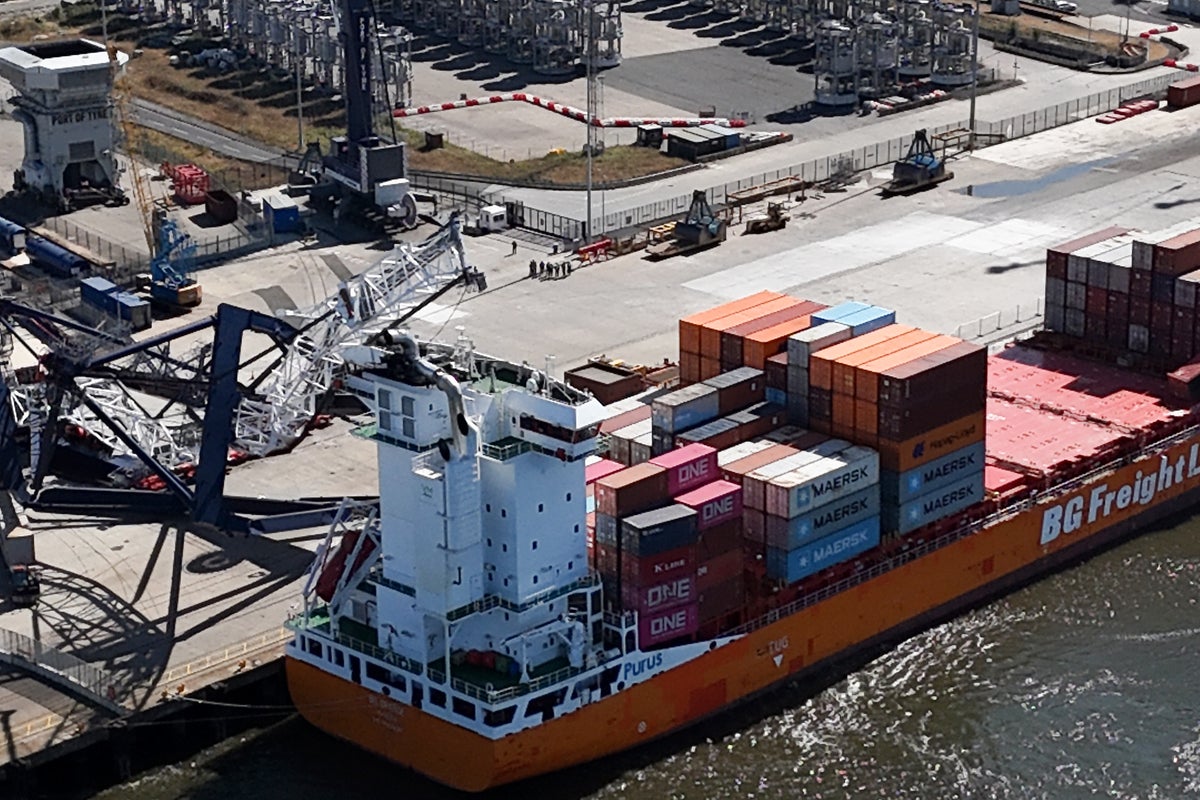
The dockside crane was crumpled, leaning on the cargo ship like a giant metal origami. Behind a line of emergency vehicles, containers had been dislodged from their positions. At 1.02pm on a Sunday afternoon, a ship had collided with a crane at the Port of Tyne in South Shields, Tyne and Wear, sending one man to hospital. It was, as one witness described, “quite horrific to see something like that.”
Here’s what happened, and what it reveals about how the UK responds to industrial incidents at its ports. On 19 July 2026, Northumbria Police received reports of a collision between a ship and a crane at the Port of Tyne. Emergency services arrived to find a man injured — his injuries were not believed to be life-threatening. He was taken to the Royal Victoria Infirmary. The North East Ambulance Service dispatched three double-crewed ambulances, two clinical team leaders, a duty officer, and three vehicles from its Hazardous Area Response Team (HART), supported by the Great North Air Ambulance. One HART vehicle remained on standby to support the fire service. The ship involved was identified as the BG Orange, operated by BG Freight Line.
“Explains the Port of Tyne crane collision, emergency response, and why these accidents matter for UK port safety.”
Ports are central to the UK economy, handling nearly 95% of the country’s trade by volume. Dockside cranes are essential for loading and unloading cargo containers. But when a ship — especially a large freight vessel — makes contact with a crane, the results can be catastrophic. Such accidents are rare, but they carry serious risks to workers, cargo, and infrastructure. The force of the collision can destabilise the crane, cause containers to fall, and endanger anyone nearby. In this case, witnesses spoke of “tangled wreckage” and the sheer force of impact.
For UK readers, this incident is a reminder that ports are not just backdrops for holiday ferries. They are high-intensity industrial zones. The Port of Tyne handles millions of tonnes of cargo each year, from cars to renewable energy components. When an accident occurs, the response involves not just police and standard ambulances, but specialist teams like HART, which are trained to operate in hazardous environments. The presence of the Great North Air Ambulance — a charity-funded helicopter — underscores how quickly serious incidents escalate.
Q: What should I do if I witness a port accident? Stay clear of the area and let emergency services work. Do not approach the scene. Contact the port authority or dial 999 if you see someone injured. If you have photos or videos, do not publish them immediately; share them with police if requested.
Q: Who investigates port crane accidents? The Health and Safety Executive (HSE) and the Marine Accident Investigation Branch (MAIB) typically lead investigations. Police may also be involved if criminality is suspected. In the Port of Tyne case, Northumbria Police said enquiries were ongoing to understand the circumstances.
Q: How often do ship-crane collisions happen? They are uncommon but not unheard of. Accidents usually result from human error, mechanical failure, or adverse weather. Each incident triggers a safety review at the port.
What happens next? The injured person will receive ongoing treatment. The Port of Tyne will likely suspend operations in the affected area while investigators examine the crane and ship. Northumbria Police will continue their enquiries. Port authorities across the UK will watch closely, reviewing their own safety protocols to prevent a repeat. For now, the twisted metal at South Shields stands as a stark reminder of the risks that come with moving millions of tonnes of cargo.
