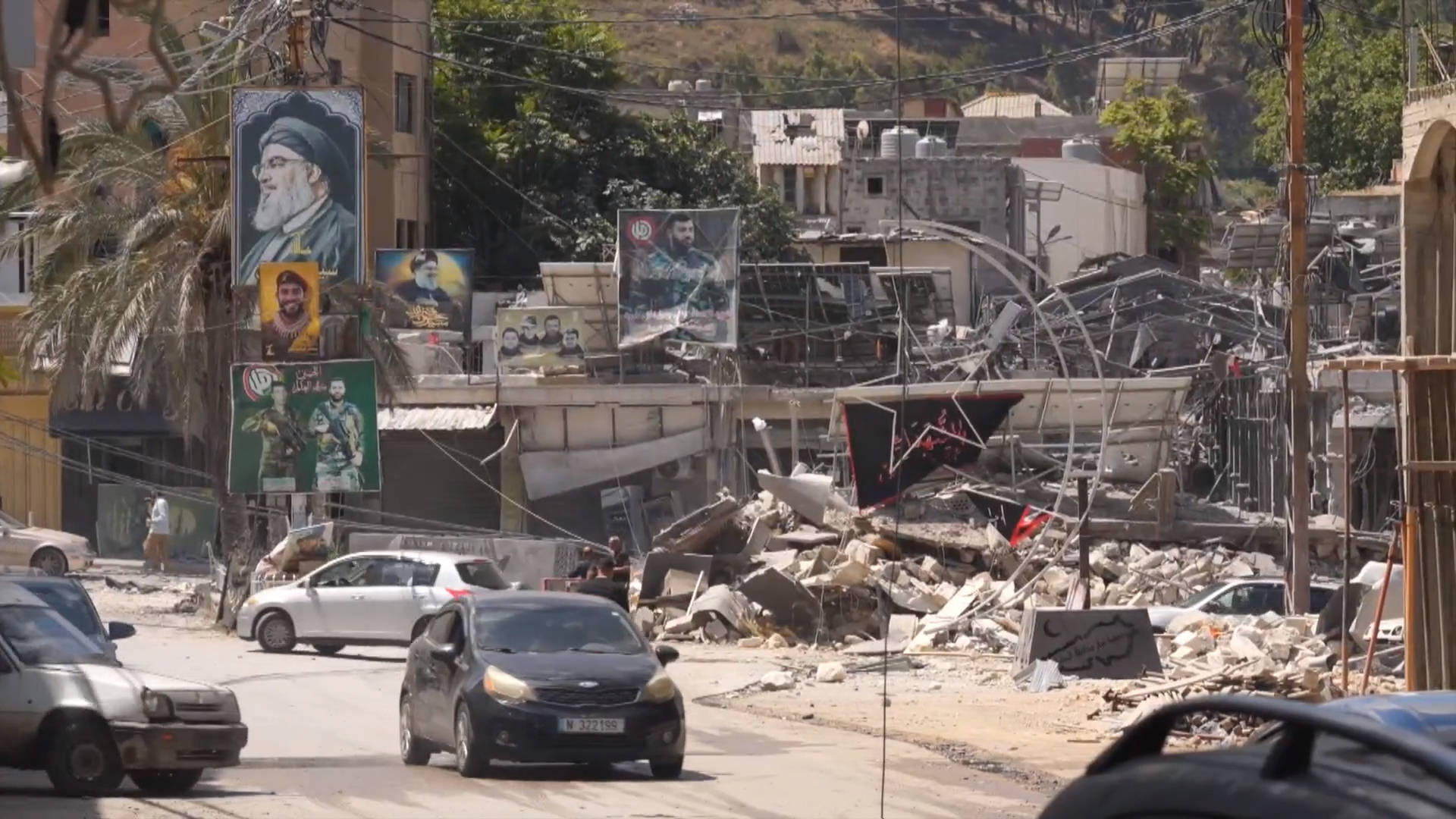
Some residents are returning to Nabatieh, in southern Lebanon, following the news of the US-Iran peace deal, but Israel says its forces will be staying in Lebanon indefinitely. The city has been devastated since the fighting between Hezbollah and Israel restarted earlier this year.
The return comes after US and Iranian officials said on Sunday they had agreed on a framework to end their war, which began when US and Israeli forces attacked Iran on February 28. The deal also halts the US blockade of Iran and reopens the Strait of Hormuz, a key supply route for global oil and gas.
“Residents return to devastated Nabatieh as US-Iran deal includes $300bn reconstruction fund, but Israel says forces stay indefinitely.”
Central to the framework is a $300bn private fund designed to trigger investment into Iran, a source with direct knowledge of the agreement told Reuters. The source, who spoke on condition of anonymity because the plan has not yet been announced, said more than half of that sum has already been committed. Washington and Tehran are preparing to sign the memorandum on Friday.
The fund is a private investment vehicle, not a reconstruction or reparations program, and will not include any government money or grants, the source said. Companies based in the US, Gulf Arab states, Asia, South America and Africa have agreed to commit financing. Investments pledged span energy, logistics, manufacturing and transport.
A senior Iranian source told Reuters that Tehran had originally sought $400bn as compensation for war damages from the US, but Washington had said it would not provide it. The idea for the fund, to be named the Reconstruction and Development Fund, then emerged.
The mechanism envisages regional countries contributing in various ways, the Iranian source said, including securing loans, establishing credit lines or directly financing the reconstruction of sites damaged in the war – such as the Mobarakeh Steel complex, refineries, airports and broader infrastructure.
Iran, one of the Middle East's largest economies, has attracted almost no significant foreign direct investment in the past four decades, frozen out of global capital markets by successive waves of US and international sanctions. The country has the world's second-largest proven natural gas reserves and the fourth-largest proven oil reserves. It also has a young, educated population of more than 92 million people, a diversified industrial base and significant untapped potential in sectors from petrochemicals to tourism.
The investment fund is entirely separate from a parallel negotiating track over the lifting of US sanctions and the release of Iranian sovereign assets frozen abroad, the source said, describing the two as distinct financial mechanisms with different purposes and timelines. The fund will not become operational until a final and satisfactory deal is concluded.
As residents trickle back to Nabatieh, the question of whether Israel will eventually withdraw remains unanswered.