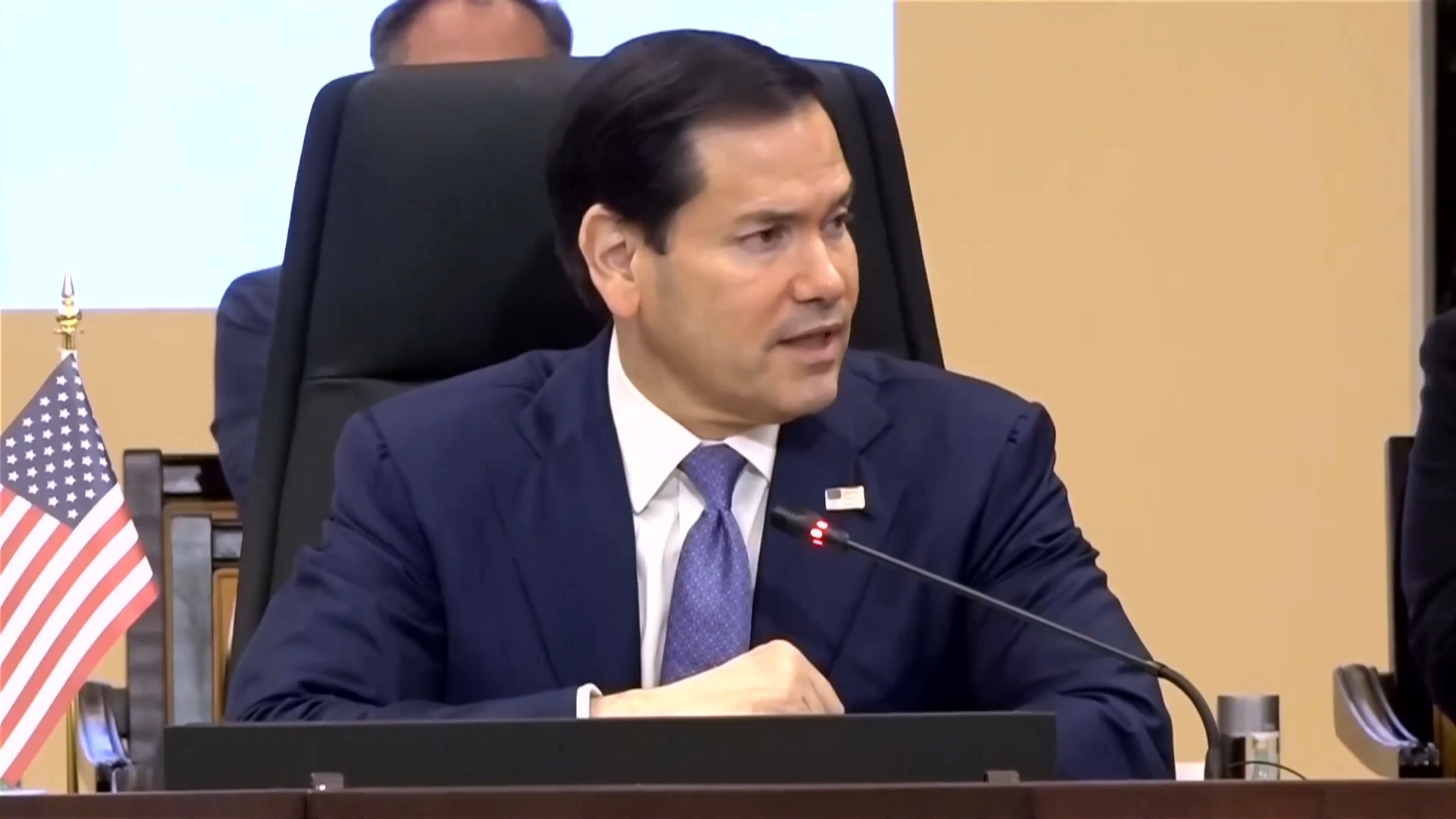
Marco Rubio has been touring Gulf states, selling Donald Trump’s Iran peace deal and reassuring allies about regional security, while the White House asks Congress for more than $66bn in urgent funding linked to the Iran war.
The diplomatic push comes after what UnHerd describes as “the latest but probably not last Iran war”, which began on 28 February 2026 with a devastating decapitation strike. The first victims included Iran’s supreme leader Ali Khamenei; the chief of the general staff, General Abdolrahim Mousavi; defence minister Aziz Nasirzadeh; heads of military research Hossein Jabal Amelian and Reza Mozaffari Nia; intelligence minister Esmail Khatib; his deputy Yahya Hosseini Panjaki; and several other officials. Mojtaba Khamenei, son of the supreme leader, has not been seen or heard from since the bombing, and is “certainly mutilated if still alive”.
“Rubio tours Gulf selling Iran peace deal as White House seeks $66bn for Iran war after devastating missile attacks.”
Iran’s response was a barrage of ballistic missiles. From 28 February until 20 April, Iran launched 1,471 missiles. Of those, 650 were aimed at Israel, 563 landed in the UAE, 265 in Kuwait, 215 in Qatar, 194 in Bahrain, and 135 at Saudi Arabia. The missiles were primitive but heavy: the older Kheibar Shekan weighs 17 metric tons with a 750kg warhead; the newer Khorramshahr weighs close to 20 tons and delivers multiple warheads up to 1,500kg.
In Israel, 650 missiles killed 27 civilians and one off-duty IDF soldier, and injured some 3,000 people, many seriously. Both the US and Israel responded with extreme precision strikes on underground missile assembly plants, detected launchers, rocket fuel depots and mixing plants.
Rubio’s tour now seeks to reassure Gulf allies who bore the brunt of Iran’s missile attacks. The $66bn funding request underscores the cost of a conflict that has already reshaped the region, even as Trump pushes a deal that critics argue avoids the core military realities.