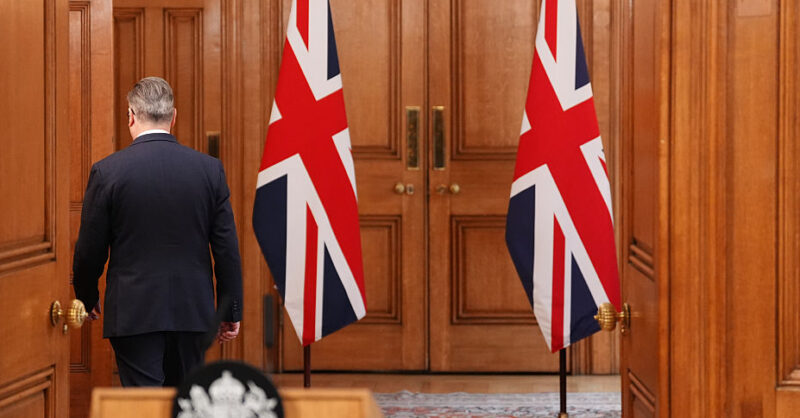
Keir Starmer spent the heatwave weekend at Chequers, contemplating his future, as a sense of inevitability grew around his resignation. Donald Trump even announced the prime minister’s impending resignation on his social media, stating it as fact. Yet as of Sunday, Starmer had not reached a final decision, however inevitable it may appear.
The prime minister’s deliberations come as he also faces scrutiny over his handling of an approach from a Jeffrey Epstein survivor. Sir Keir Starmer told Lisa Phillips his “door is open” but stopped short of agreeing to meet her, directing her to a more junior government minister. Phillips, a survivor of the late financier Jeffrey Epstein, is now expected to meet Starmer’s chief secretary, Darren Jones.
“Keir Starmer faces resignation pressure as he directs Epstein survivor to junior minister.”
Starmer has insisted he is not going anywhere. On Friday (19 June), he said he was not resigning. But over the weekend, friends and allies concluded it was game over, and Starmer himself began to consider his departure. He is furious at the damage he thinks has been done to the government by those who have wanted him out for at least six months – including Andy Burnham, Wes Streeting and his once-loyal friend Ed Miliband. “Hang on, it’s not me who started this, it’s them!” one Starmer ally quoted him as saying.
Starmer is also resentful that it’s now being suggested that he would be the one causing chaos or instability if he stayed. He genuinely does not think Burnham is ready to succeed him. Burnham’s allies have made clear privately that a September handover would be their ideal timeline to allow the new leader to prepare for office, as well as giving Starmer time to leave with dignity. But one ally compares that idea to Starmer, having been forced out, then being asked to “mind the shop for three months while Andy...”.
The prime minister has learned, through trial and error, not to rush decisions. He has taken his time with most important decisions and has regretted the moments where he has not, such as the sacking of Olly Robbins. “Some of his worst decisions have been taken to meet the demands of certain news cycles,” one Starmer ally says. In the weekend-long “grace period” provided by Andy Burnham, a similar sense of inevitability and expectation is building.
The Epstein survivor meeting adds another layer of pressure. While Starmer has not agreed to meet Phillips himself, he has directed her to Darren Jones, the chief secretary. The prime minister’s decision to delegate the meeting may be seen as part of his broader approach to handling sensitive issues while under internal and external fire.