When Jasmine was 16, she wasn’t fussed about Snapchat – the brand new app all her friends were signing up for. But after her boyfriend coerced her into sending explicit images and later shared them on a dating app, she discovered the dark side of disappearing messages. ‘You could write the most abusive message in the world, and you send it on Snapchat. Well, I’ve got no evidence of that occurring,’ she tells Metro.
Now in her 20s, Jasmine – who asked to use a pseudonym – only realised her ex had been leaking her images when one of his dates messaged her on Instagram, worried ‘something was off’. ‘I didn’t remember these images existed. Why is it even here? Why is there a Snapchat filter on it? What is going on?’ she says. The nonconsensual sharing of sexually explicit images is a criminal offence in the UK. Jasmine reported her ex to the police and he was arrested, but prosecutors said that unless she testified in court – something she says would have been too traumatising – she didn’t have much of a case. The experience left her suffering from depression for years.
“A woman whose explicit images were leaked at 16 opposes the government’s social media ban for under-16s.”
Yet despite her ordeal, Jasmine does not back the government’s announcement on Monday of a ban on social media for under-16s. ‘If we didn’t have social media, we would have found a more dangerous way of doing things,’ she says. Now working with the children’s charity NSPCC to promote online child safety, she argues the ban is not the answer.
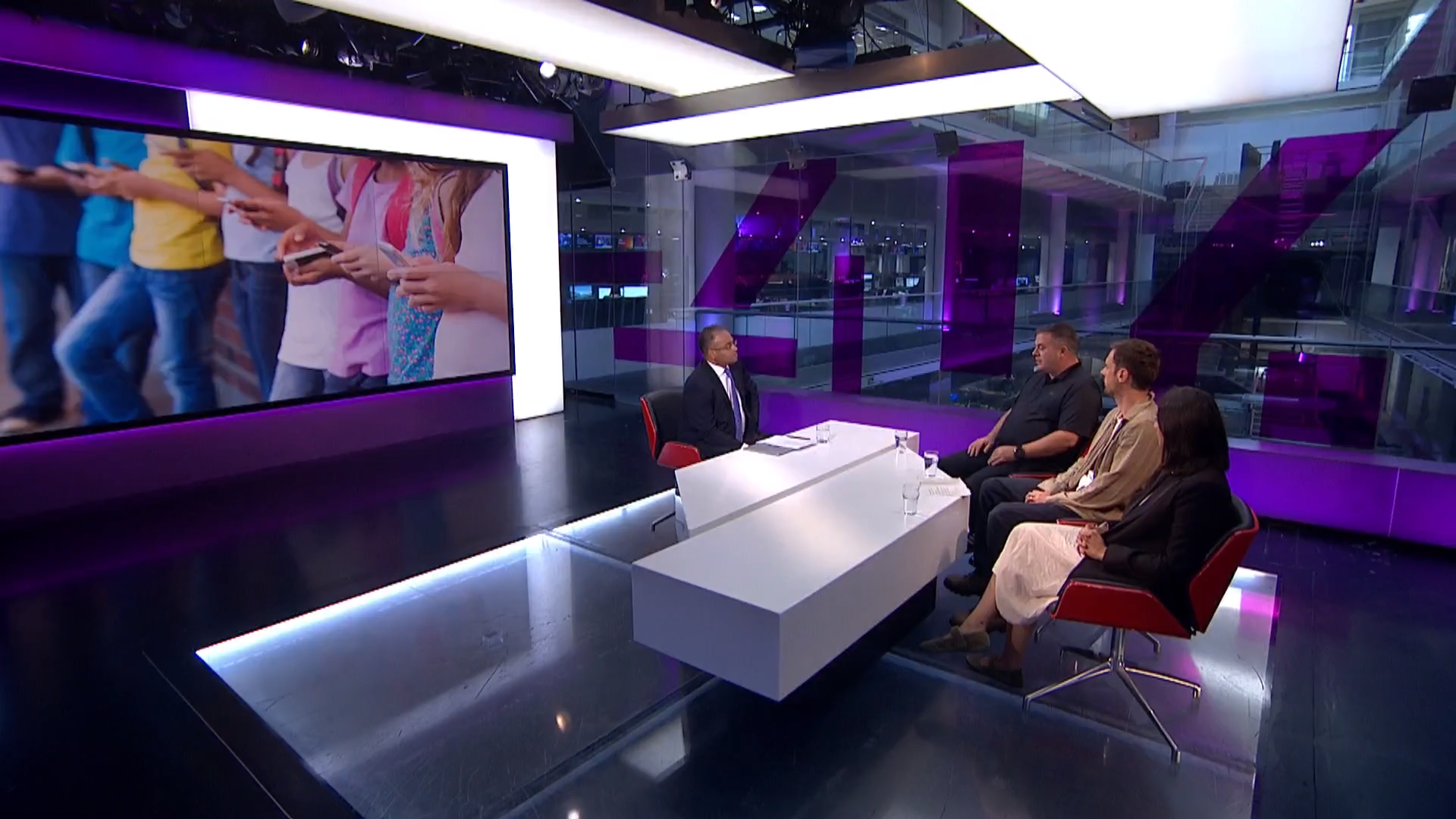
Her view clashes with that of Liam Walsh, who believes his daughter Maia took her own life as a result of social media. He appeared on Channel 4 News alongside Joe Ryrie from the campaign group Smartphone Free Childhood and Doniya Soni-Clark from Tech UK, which represents tech companies. The programme, hosted by Krishnan Guru-Murthy, posed the question: will the social media ban actually work?
Jasmine’s story illustrates the complexity of the issue. She describes the fear of missing out that drove her onto Snapchat: ‘FOMO is the biggest thing when you’re young. I can’t come into school and hear, “Did you see what Charlotte posted?” Everyone saw it, so I need to see it, too.’ Snapchat tells users when a screenshot is taken, but she had no idea her ex was saving and sharing the images with strangers. After the breakup, he harassed her and threatened to share more pictures taken when she was underage – which are banned by both Snapchat’s rules and UK law.
The debate over the ban comes as the government seeks to protect children, but as Jasmine’s experience shows, even those who have suffered the worst harms may not see prohibition as the solution.