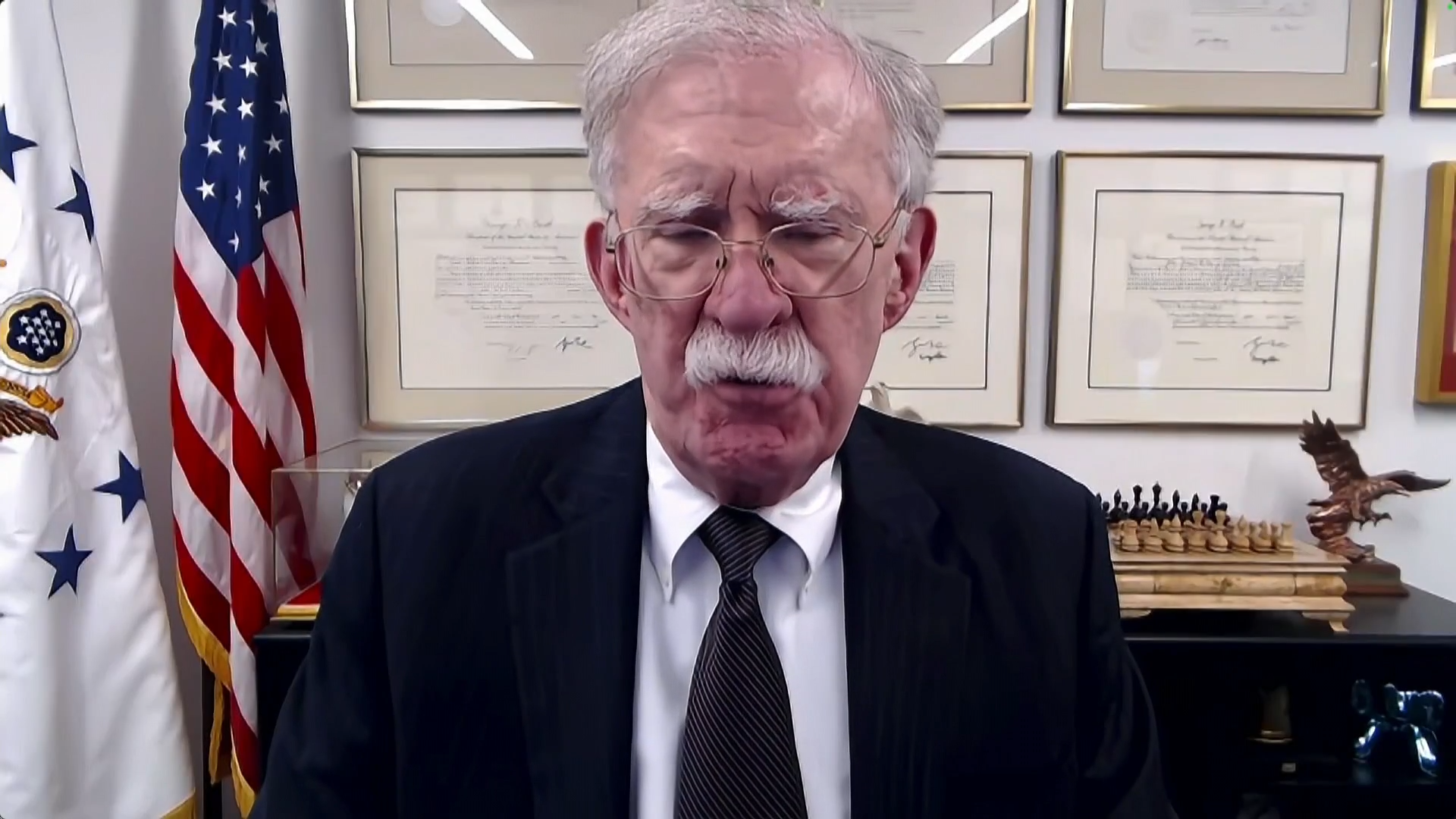
Donald Trump has threatened to “go back to dropping bombs right smack in the middle of their heads” if Iran does not “behave” under the peace deal provisionally reached over the weekend. Speaking at a G7 press conference, the US president said the agreement had not been finalised and that if he did not like the “understanding” eventually reached, “we will go back to shooting at them.” The threat came hours after John Bolton, Trump’s former national security advisor, told Channel 4 News that the president was “not happy with terms” of the deal. Bolton, who now faces charges of retaining classified documents, has frequently advocated for regime change in Iran and has since fallen out with Trump.
The accord, due to be signed on Friday, was provisionally agreed after more than three months of conflict that caused thousands of deaths and significant economic disruption. The full text has not been released, but a series of talking points printed on White House-headed paper stated that Iran will not receive any American taxpayer money and will only get financial incentives if it meets certain benchmarks. Trump dismissed reports of a $300bn payout to Iran as “Fake News, put out by the Dumocrats” on Truth Social, adding that “Iran has agreed to never have a Nuclear Weapon!”
“Trump threatens to bomb Iran if peace deal terms displease him, as Bolton says president 'not happy'.”
Iranian media reported that three of the country’s oil tankers, carrying 5m barrels of crude oil, have passed through the Strait of Hormuz today, offering a tentative sign of de-escalation. However, the US intelligence and the International Atomic Energy Agency have said that while Iran closed its nuclear weapons programme in 2003, it has continued enriching uranium to near weapons-grade in recent years. All three plants involved were hit in US strikes last June.
The Iranian foreign minister, Abbas Araghchi, remains influential in Tehran despite the conflict. Araghchi, described by a former UK ambassador as “among the most accomplished of diplomats”, wrote a book last year warning that the “Iranian negotiation style … requires great patience and time” and that “he who gets tired and bored quickly will lose.” The agreement is expected to address the fate of Iran’s stockpile of highly enriched uranium within 60 days, though it remains unclear whether Tehran will agree to its complete removal, with hard-liners opposed.
Opposition to the deal remains strong within Iran and Israel, and some influential Republicans are uneasy about potential concessions. Miles Taylor, former chief of staff at the US Department of Homeland Security, recalled Trump’s behaviour at the 2018 G7 in Canada, where he flicked a Starburst sweet across the table at Angela Merkel and later detonated the joint communiqué. “It was as if Putin himself had drafted his talking points,” Taylor wrote. With the peace deal yet to be signed, a residual risk remains that Washington could reverse course, as it has done repeatedly during the conflict.