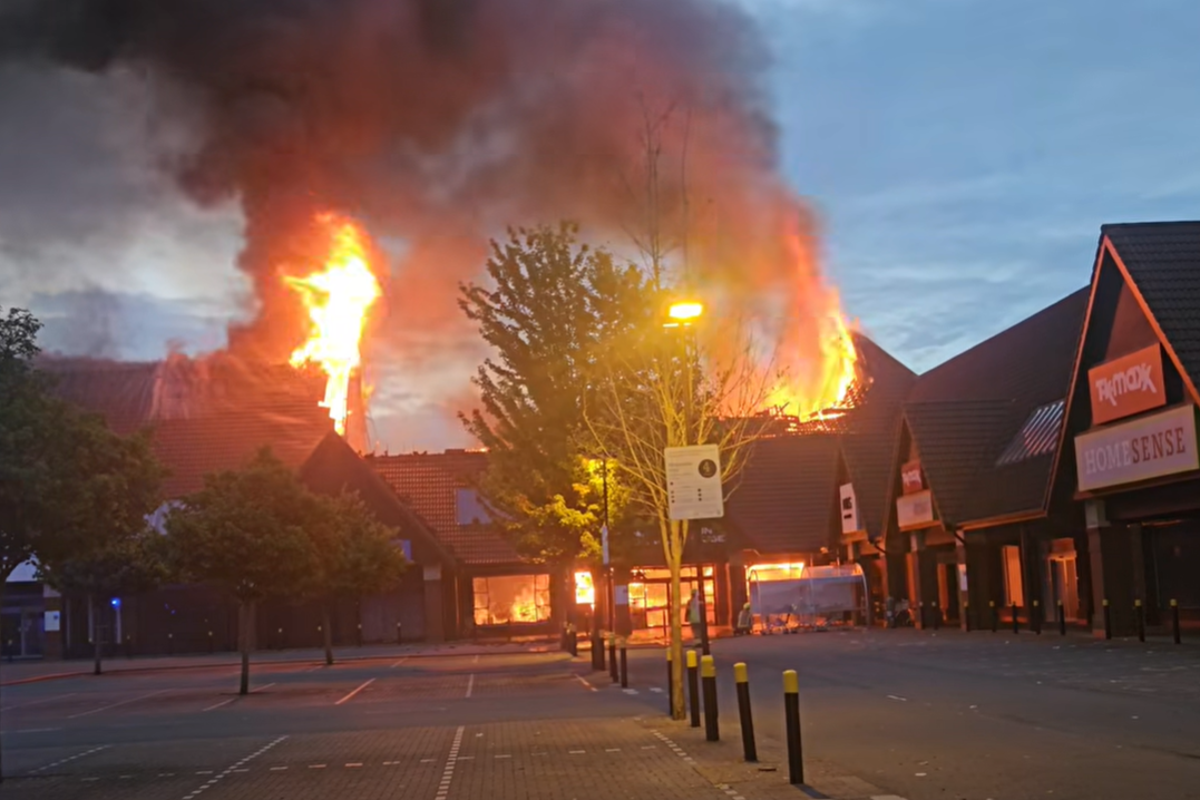
In the early hours of a Saturday morning, more than 40 firefighters rushed to a shopping centre in Leicestershire as a fire tore through the roof—part of it collapsing as smoke billowed across the sky. Just hours later, a train collision was reported near Bedford, and a teenage boy was fatally stabbed in London. These three incidents, all occurring on 20 June 2026, highlight the range of emergencies that UK emergency services handle daily. But how do fire, police, and ambulance services coordinate their response when disaster strikes?
When a major incident is called in, each emergency service has specific roles. In the Thurmaston Shopping Centre fire, Leicestershire Fire and Rescue Service deployed eight fire engines, two aerial appliances, and over 40 firefighters. The first priority was to control the blaze and prevent it from spreading to other units. Residents were advised to keep windows and doors closed due to a significant smoke plume. Cordons were set up—part of the car park reopened, but areas near Mountain Warehouse, M&S, and Greggs remained closed. The fire was eventually extinguished, but several shops, including those three, stayed shut.
“How UK emergency services respond to fires, train collisions, and stabbings, using three recent incidents as examples.”
For train collisions, responsibility often falls on British Transport Police, who coordinate with local fire and rescue. In the Bedford-Luton incident, officers reported a "collision involving two trains" and fire teams were on scene. The exact cause and injuries were not immediately clear, but the response involved securing the site and managing any casualties.
In the case of a violent crime like the stabbing on Glycena Road, Battersea, the Metropolitan Police launched a murder investigation. London Ambulance Service and London's Air Ambulance attended, but the 17-year-old victim was pronounced dead at the scene. A large crime scene remained in place while detectives gathered evidence.
The common thread in all these responses is a multi-agency approach. Firefighters tackle structural fires and rescue people; police secure scenes and investigate; paramedics provide medical care. Each service has its own command structure, but they work together under a joint operational protocol.
Why does this matter for UK readers? Understanding how emergency services mobilise can help you know what to expect if you witness or are caught up in an incident. Staying away from cordons, closing windows if advised, and following official guidance can keep you safe. It also explains why certain areas may be closed for hours or days during investigations.
Q: How many firefighters typically attend a large shopping centre fire? The number depends on the scale. In the Thurmaston fire, Leicestershire Fire Service sent over 40 firefighters with eight engines and two aerial appliances.
Q: Who investigates a train collision? British Transport Police lead the response, working with local fire services. In the Bedford-Luton incident, they confirmed reports of a collision and deployed resources.
Q: What happens when a teenager is stabbed in London? Police cordon off the scene, paramedics attempt lifesaving treatment, and a murder investigation is launched. Air ambulance may attend, as it did in the Battersea stabbing.
What happens next varies. The damaged shopping centre and train collision site will undergo forensic examinations. The murder investigation will involve house-to-house inquiries and CCTV checks. All three incidents remain under investigation, with further updates expected from the respective authorities.