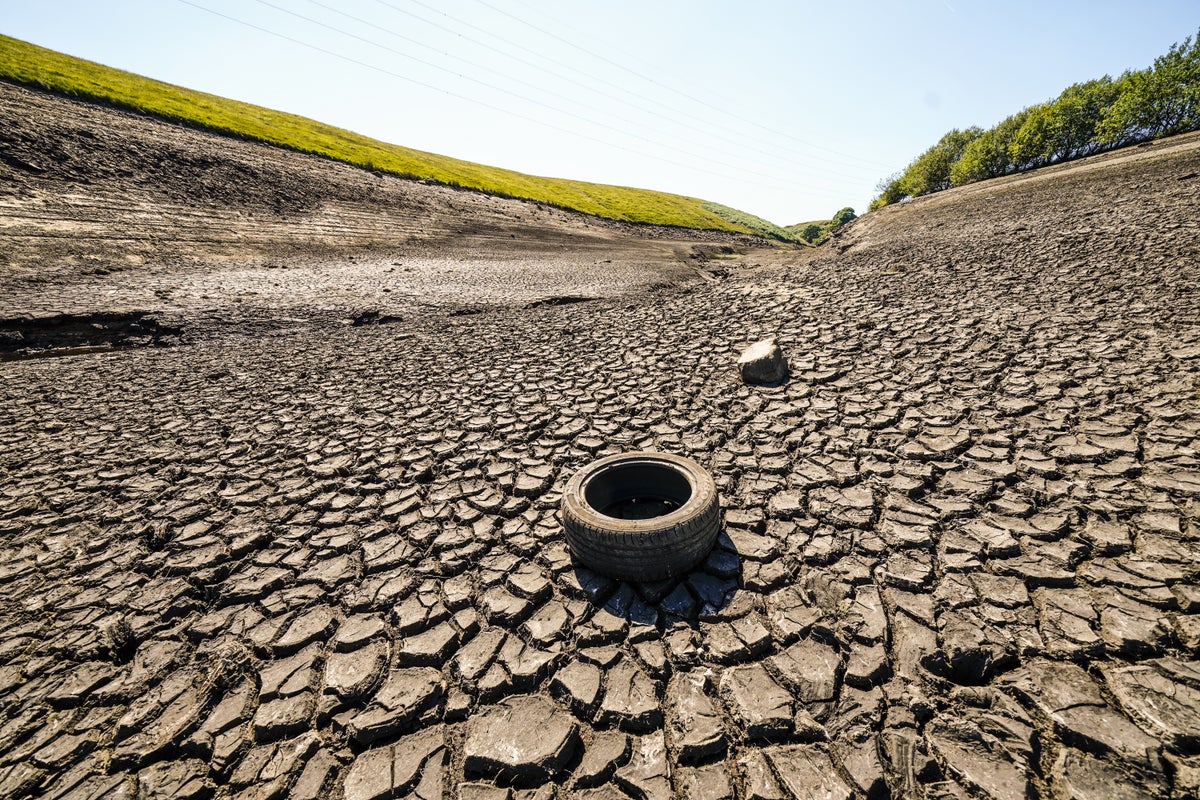
As Britain braces for a summer of extreme heat, two very different warnings have emerged: one about the nation’s food imports and the other about a tiny but painful hazard for dogs.
An analysis by the Energy and Climate Intelligence Unit (ECIU) reveals that agricultural workers cultivating goods such as rice, coffee, tea and chocolate are enduring increasingly difficult conditions as climate change drives record-breaking global temperatures. This precarious situation is expected to intensify further, with UN scientists finding an 80% likelihood of a warming El Niño weather event this summer. That could lead to 2027 becoming the hottest year on record, experts warned.
“UK food imports at risk as El Niño expected; dog owners warned about grass seeds burrowing into pets.”
Developing countries – often most exposed and least resilient to global weather extremes – supplied 13% of the UK’s food imports, worth £8.9 billion in 2025. The 15 top suppliers from this group alone accounted for 11% of UK food imports, valued at £7.4 billion. These include rice, for which India is the UK’s biggest supplier, as well as fruits like grapes, lemons, oranges and nectarines from South Africa, Peru and Egypt, coffee from Vietnam and Brazil, cocoa beans from Cote d’Ivoire and Ghana, Colombian and Ecuadorian bananas, and Kenyan tea.
But the ECIU found that farmers in these 15 countries lost 216 billion potential work hours in 2024 because of heat stress, equating to nearly 49 working days per worker every year. Citing research in the Lancet Countdown report, the ECIU said 640 billion potential work hours were lost as a result of heat exposure in 2024 – higher than the previous highest year and more than 98% higher than the decade from 1990 to 1999. Agricultural workers are by far the group most exposed, with nearly two-thirds (63.5%) of all potential work hours lost, or three quarters (75.5%) in poorer countries.
Shamika Mone, a rice farmer in India and president of the Intercontinental Network of Organic Farmers, said: “Extreme heat makes the already difficult job of farming even harder. There are real fears that hotter, drier weather caused by a super El Nino could damage harvests.”
On a more immediate, everyday level, practising vet Dr James Greenwood, who sometimes appears on BBC Morning Live and ITV's This Morning, has issued a timely reminder for dog owners after checking his own dog. He wrote on Instagram: “Filming for something else, then felt this little blighter buried in Dolly’s coat. I’ve not had to remove one from a patient this year (yet!). I guess this serves as a timely reminder to begin checking ears, feet, groin and all through your dog’s coat after every walk.” He held up a small seed, measuring less than a fingertip in size.
According to animal welfare charity Blue Cross, all dogs face the risk of picking up these grass seeds during walks, particularly through meadows and woodland throughout the summer months. A spokesperson said: “Grass seeds are small, pointy seeds that are attached to the tops of long grass stems. They are a problem for dogs because they can easily brush off into their fur during walks. If they become trapped in your dog’s fur, they can burrow down and pierce their skin. They can also get stuck in your dog’s paws, ears, eyes or nose. If your dog becomes injured by a grass seed, it can be very painful. In rare cases, grass seeds can go under the skin and travel to other areas of your dog’s body, such as their chest.”
Symptoms of a lodged grass seed include particular behaviours or noticeable symptoms. If you find a grass seed in your dog’s coat that has not yet broken the skin, you can brush it away. If you find a seed that has begun to burrow, or suspect one in the eye or ear, contact your vet immediately.