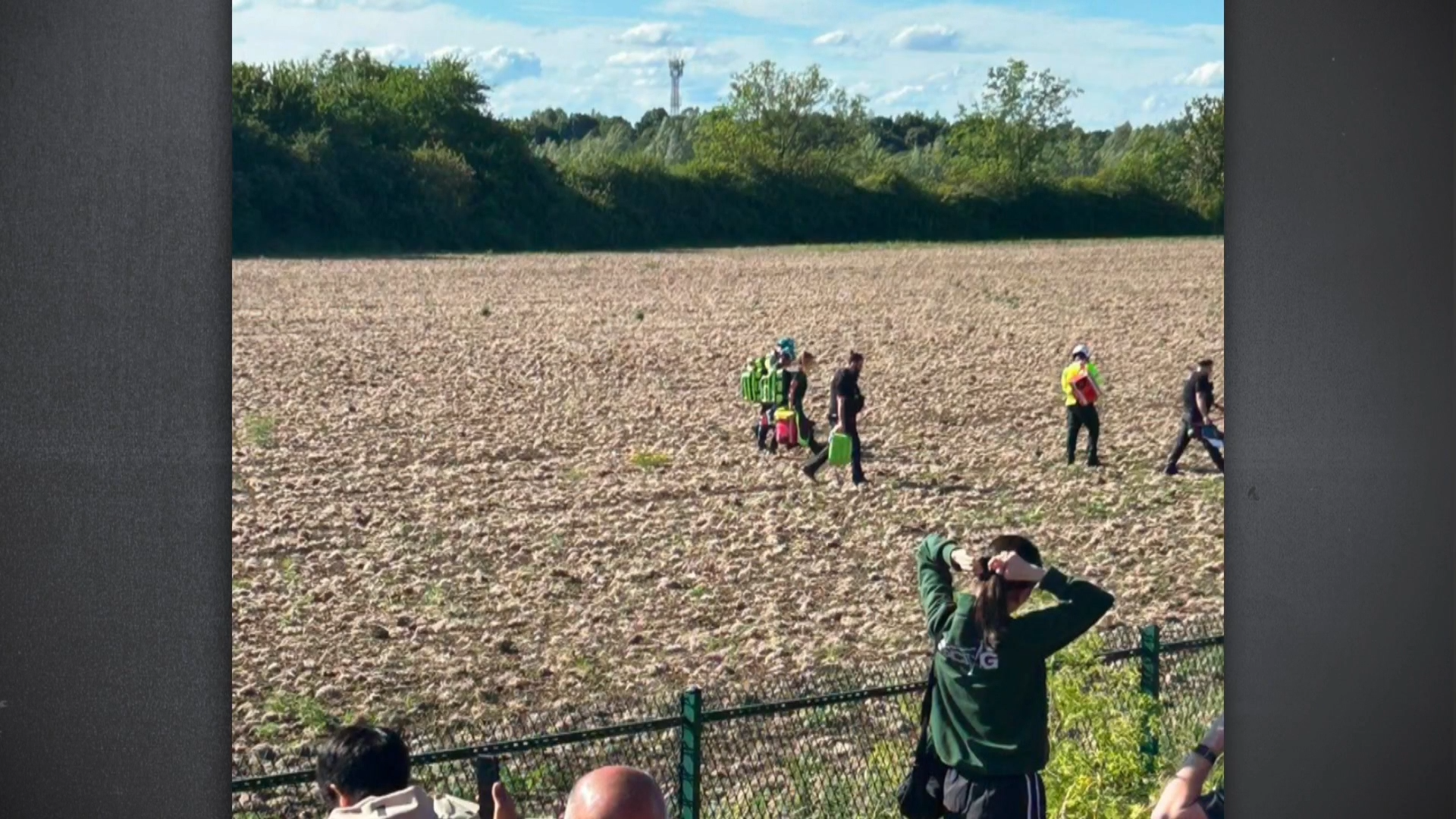
On a Friday evening in June 2026, two passenger trains carrying hundreds of people collided just south of Bedford. One driver was killed and 89 passengers and crew were injured, 11 of them very seriously. The crash happened at about 5.15pm near the Elstow interchange, involving an East Midlands Railway service from Corby to London St Pancras and another from Nottingham to the same station. Witnesses described a violent impact, with passengers thrown forward and smoke filling the carriages. Within minutes, a major incident was declared, and emergency services – including 20 ambulances and six air ambulances – were dispatched to the scene.
The basics of what happened are this: two passenger trains on the same line collided. British Transport Police said one train struck another that was stationary or moving slowly. The driver of one of the trains died; the other driver and 88 others were injured, with injuries ranging from minor cuts to broken bones and facial wounds. The Rail Accident Investigation Branch (RAIB) arrived at the scene the same evening to begin its inquiry. Network Rail, which manages Britain’s rail infrastructure, said its “absolute priority” was ensuring everyone received the care they needed.
“A look at how train collisions happen in the UK, the safety systems in place, and the investigation process.”
To understand why a crash like this happens – and what it means for passengers – it helps to know how Britain’s rail system is designed to prevent collisions. The network relies on a combination of signalling, automatic train protection systems (such as the Train Protection & Warning System, TPWS) and driver vigilance. TPWS can automatically apply brakes if a train passes a red signal at too high a speed or approaches a speed restriction. But these systems are not foolproof; they can be overridden or fail in rare circumstances. The UK has one of the safest railways in Europe, but collisions still occur, usually due to human error, signalling failures or infrastructure problems. The last major passenger train collision in the UK was in 2021 at Salisbury, where a train hit a stationary vehicle at a level crossing.
For UK readers, this crash matters because it affects the rail services that millions rely on every day. Services between Luton and Bedford were suspended, and trains to and from London St Pancras were cancelled. Beyond the immediate disruption, every rail collision raises questions about the safety of the network, the effectiveness of existing protections, and whether more investment is needed in modern systems like the European Rail Traffic Management System (ERTMS), which replaces traditional signals with in-cab displays. The Bedford crash also highlights the risks faced by train drivers: the person killed was the driver, not a passenger, and was described by his union as a former union representative.
Q: How often do train collisions happen in the UK? UK rail is very safe: there have been only a handful of passenger train collisions in the last 20 years. Fatal collisions are extremely rare. The most recent before Bedford was the 2021 Salisbury incident, and before that the 2007 Grayrigg derailment (which was not a collision). Britain has one of the lowest rail fatality rates in Europe.
Q: What does the Rail Accident Investigation Branch do? The RAIB is the UK’s independent rail accident investigator. It sends inspectors to the scene to gather evidence – including data from train data recorders (black boxes), signalling records, and witness statements – and produces a public report with findings and safety recommendations. It does not assign blame; that is for the police and courts.
Q: Will passengers get compensation if their train is delayed or cancelled? Yes. Under National Rail Conditions of Travel, passengers delayed by more than 15 minutes can claim compensation through Delay Repay schemes. For a major incident, train operators usually waive the usual threshold and pay out more quickly. East Midlands Railway would handle claims for this crash.
The immediate next step is the RAIB investigation, which is expected to take several months to complete its report. British Transport Police will also carry out a separate investigation to determine whether any criminal offences were committed. Network Rail and East Midlands Railway will cooperate fully. In the meantime, safety measures – such as extra signal checks or speed restrictions on that section of line – may be put in place while the cause is determined. The tragedy will also reignite debate about the pace of installing ERTMS on the UK network, a project that has been delayed for years.