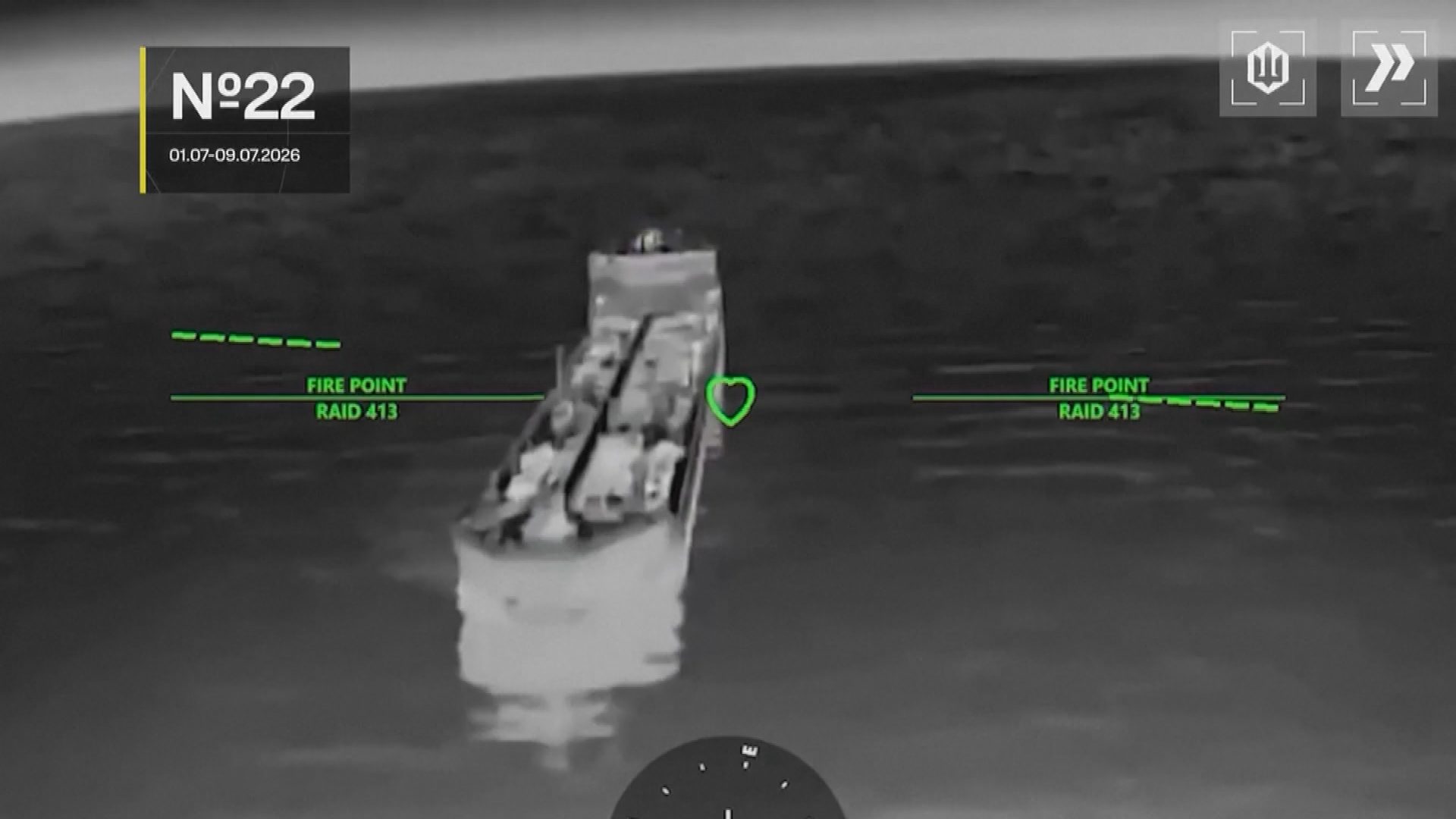
Ukraine's military says it has struck 21 Russian tankers with drones overnight, the latest blow in a campaign to deprive Russian forces in occupied Ukraine of fuel. The strikes come as part of a broader assault on Russian shipping that has seen 76 vessels hit in the past week alone, according to Kyiv.
The attacks are not isolated. Since spring, Ukraine has intensified strikes on refineries producing gasoline, diesel and jet fuel, contributing to shortages across large parts of Russia. Last week, Ukrainian drones struck the Omsk refinery more than 2,500 kilometers from the front line — a facility that processes around 10 percent of Russia's total refined oil output. Ukraine’s General Staff said the strike damaged a primary oil processing unit. Other refineries in Tatarstan, Saratov and Voronezh were also hit, and on Sunday a Ukrainian drone struck a tanker as it entered the canal between the Sea of Azov and the Black Sea.
“Ukraine struck 21 Russian tankers overnight, part of a campaign against fuel supplies that has hit 76 vessels in a week.”
Kyiv and its allies believe these deep strikes have given Ukraine a battlefield edge — which they now need to turn into leverage. Estonian Foreign Minister Margus Tsahkna told POLITICO: “We see a weaker Russia. The reason is that Ukraine has been able to fight and develop their own capabilities for deep strikes.” He added that the approach to Russia must be “more pressure, no compromises, and only [negotiate] from strength. Putin is still rational.”
Two Ukrainian officials, granted anonymity to speak freely about Kyiv’s thinking, said the key now is to pile pressure on President Vladimir Putin before Russia can copy Ukraine’s drone technology and use it for counterstrikes. The other critical factor is timing: Ukraine suffers much more in winter as Russia smashes its energy grids and central heating networks with relentless drone attacks, while temperatures plummet to minus 20 or 30 degrees Celsius in some areas. Russian attacks have pummeled Ukraine every winter of the war so far.
For now, Ukraine has the upper hand in the war, something that could also shape the terms of any renewed peace talks led by U.S. President Donald Trump, the officials said. President Volodymyr Zelenskyy has signaled he would be willing to freeze the war along current lines, but Putin wants Ukraine to cede territory that his forces do not fully control. Kyiv’s concern is that any peace initiative could turn into pressure on Ukraine to make concessions, rather than on Moscow to stop fighting.
Alina Frolova, who served as Ukraine’s deputy defence minister and is now deputy chair of the Centre for Defence Strategies, commented on the campaign's significance, though specific remarks were not provided in available sources. The question now is whether Ukraine can sustain its offensive momentum before winter turns the tables.
