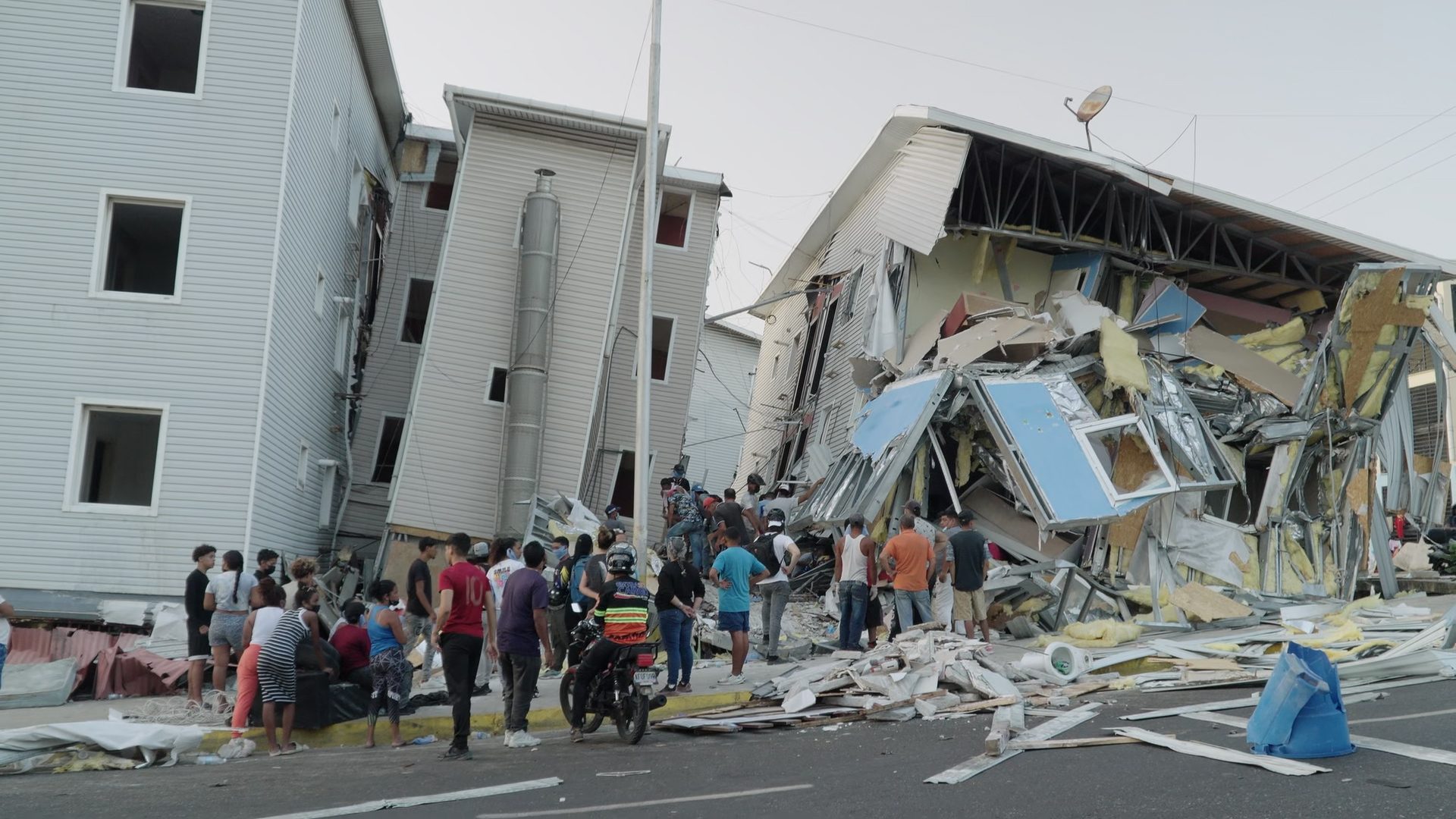
A newborn baby wrapped in a pink blanket was carried alive from the remains of a collapsed house in La Guaira on Saturday, 32 hours after the first of two catastrophic earthquakes struck Venezuela. Crowds cheered and clapped as a young man wept with joy and hugged the child, while rescuers later freed the baby’s mother from the same debris.
The infant’s rescue, captured on video shared via Instagram user Andreina Quintero, came as the confirmed death toll from Wednesday’s twin quakes rose above 1,400, with more than 70,000 people still reported missing. Thirty-three survivors were pulled free over the weekend, but for many families the search has turned to recovering bodies: two brothers in La Guaira are desperately trying to find the remains of their sister and nieces.
“A newborn baby rescued from rubble in Venezuela as UK sends £2m aid and volunteers join search for survivors.”
The first earthquake, of magnitude 7.2, hit northern Venezuela on Wednesday and was followed just 39 seconds later by a second 7.5 tremor. Marcos Ferreira, a geophysicist at the Geological Survey of Brazil, said the back-to-back shocks – known as a doublet – amplified the destruction. “It is as if I am screaming and then someone starts screaming, too,” he said. “That amplifies the vibration and adds to the potential hazard.” The doublet was the most intense to strike the country in more than a century, engineers said.
La Guaira, a coastal city in northern Venezuela, was declared a disaster zone after buildings collapsed. There, an 11-year-old boy was also pulled alive from under debris, prompting one emotional rescuer to say: “[We are] working together with love, because life is the important thing we have.”
International rescue teams have poured into the country, with 17 flights carrying more than 1,600 foreign responders landing in recent days. The UK government sent £2 million in humanitarian aid, and a specialist team of British crisis-response volunteers is assisting the operation. But locals say the government has mobilised too slowly, and the first 48 to 72 hours – critical for saving lives – have already passed.
Meanwhile, the hunt for tens of thousands of missing people continues, even as families dig through rubble for their dead.