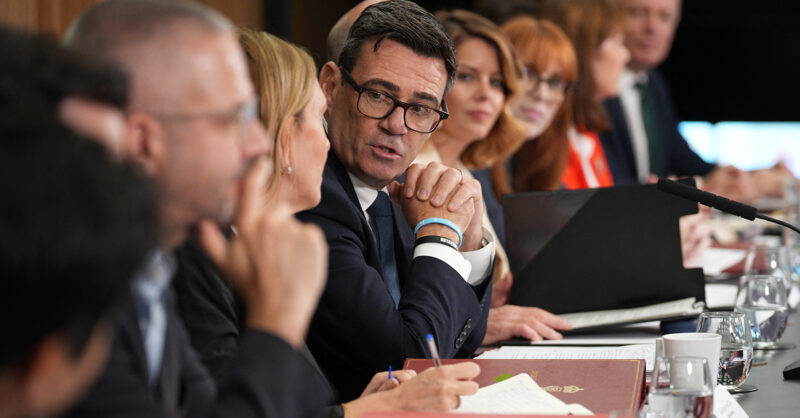
Andy Burnham stepped out of Downing Street on Monday afternoon (20 July) to deliver the first speech of his premiership. He had no notes, no lectern. Instead, he played track nine from the Oasis album Dig Out Your Soul—'Ain't Got Nothin''—bought at Piccadilly Records. 'C’mon son, no handshakes, have a hug, you’re Chancellor of the Exchequer now,' he declared, setting the tone for what he calls 'Burnham’s Britain'. Ties are off. Politics, he said, is about 'putting people back into the heart of politics'.
At the centre of his vision is a policy he calls 'No 10 of the North'—decentralising key government functions to Manchester, where he was mayor. He presented this as a simple idea from a simple lad, though critics may note his own career: chief secretary to the Treasury from 2007-2008, Cambridge University, and an Everton season ticket holder. 'I’m doing it because the one thing all civil servants tell me—their mate Andy—is that they want more bureaucratic friction back at the heart of government,' he said.
“Andy Burnham gave his first speech without notes, playing Oasis, and unveiled 'No 10 of the North', echoing poet Basil Bunting's Northern identity.”
Burnham’s embrace of Northern culture—references to New Order, the Stone Roses, Northern Soul music, and the poetry of Tony Harrison—is not without historical precedent. On the 60th anniversary of Basil Bunting’s masterpiece Briggflatts, the Tyneside-born modernist poet (1900-1985) offers a striking parallel. Bunting, a Quaker who was sent to Leighton Park School in Berkshire, wrote to his headmaster about a 'grand underlying difference between North and South which makes people with Northern manners comfortable & easy to deal with, but people with the Southern manners… 'impossible' & hateful.'
His refusal to fight in the First World War on grounds of conscientious objection led to imprisonment in Wormwood Scrubs. As his friend Denis Goacher later recalled, the abuse he suffered as a 'conchie' 'coloured all he thought about England, about the Establishment, the 'Southrons' as he called us… this experience embittered him for life'.
After his release in 1919, Bunting met the modernist provocateur Ezra Pound while playing 'swashbuckling kind of chess' in a Paris café in 1923. When Bunting was jailed for drunk-and-disorderly behaviour weeks later, Pound bailed him out. Their friendship cemented Bunting’s rejection of English tradition—a rejection that now finds echoes in Burnham’s pro-North agenda.
Whether Burnham is aware of Bunting remains unclear. But the poet’s life—born amid rejoicings for the relief of Ladysmith in the Boer War, dying shortly after the Miners’ Strike—encapsulates a century of Northern defiance. As Burnham builds his 'No 10 of the North', the question lingers: how much further can he go in putting Northern manners at the heart of government?