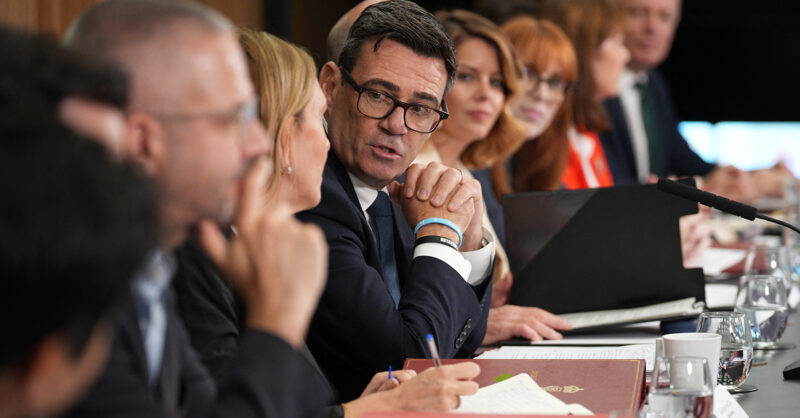
Barely a week into his premiership, Andy Burnham has already announced a series of popular cost-of-living measures — cutting electricity bills, restoring the £2 bus fare cap in most of England, and reducing business rates for pubs and clubs by 20%. But a major think tank is warning that the new prime minister has no room to borrow more, meaning every new pledge must be paid for by raising taxes or cutting spending elsewhere.
The National Institute of Economic and Social Research (Niesr) has calculated that the public finances are under sustained pressure from inflation that is set to keep rising until February 2027, peaking at 3.8% before falling back to the Bank of England’s 2% target. In its latest economic outlook, Niesr said it does not expect the central bank to cut interest rates until 2028. Its deputy director for macroeconomics, Stephen Millard, told the BBC: “There’s clearly no scope for increasing borrowing, so it is about choices.”
“Burnham's cost-of-living pledges meet fiscal reality: Niesr warns no borrowing room, forcing tax hikes or spending cuts.”
Burnham has inherited an economy still struggling with the aftermath of the Iran war, which Niesr says has made inflation more persistent. At the same time, he is trying to honour Labour’s manifesto pledge not to raise income tax, VAT or national insurance contributions for working people — a promise he says he will keep. But the think tank argues that funding his commitments will require either spending cuts or tax reforms that could breach that pledge.
One obvious target for savings, Millard suggested, is the welfare bill, including the expensive state pension triple lock. He also pointed to reforming council tax towards a land value tax, or scrapping some VAT exemptions. “Once you’ve done all of that, then I’m afraid I would break the manifesto promise and would be looking at the income tax rate,” he said. The Treasury responded by saying the government will stick to its fiscal rules while investing in public services.
The spending squeeze comes as Burnham faces simultaneous demands on multiple fronts. He has committed to maintaining the UK’s £25bn in funding for Ukraine — and during a visit from President Zelensky, his first international guest, he announced the sharing of the “Stone Cloak” electronic warfare system to help Ukraine produce drone jammers at scale. He also promised to visit Ukraine soon and push for a full and unconditional ceasefire. Meanwhile, he has called a social care summit with Tory leader Kemi Badenoch and Lib Dem leader Sir Ed Davey, warning that the NHS could collapse unless a solution is found. But funding for social care remains unresolved; a previous attempt by Burnham as health secretary in 2009 was derailed by Tory attacks over a proposed “death tax”.
For UK readers, the immediate consequence is that many of the new government’s headline promises may not survive the fiscal reality. If the economy does not improve quickly, the choice will be between higher taxes, cuts to services, or breaking manifesto commitments. Defence spending is particularly exposed: Burnham needs to find between £5bn and £18bn to meet the UK’s commitments, and there have been suggestions he may issue war bonds — another form of borrowing. With inflation expected to stay above target for at least another year, household budgets are likely to remain under pressure, and interest rates may stay high well into 2028.
Q: Why can't Andy Burnham just borrow more money to fund his plans? Niesr’s analysis shows the government’s borrowing capacity is already maxed out. Every major shock this century has pushed national debt higher without any reversal, and the think tank warns that “treading water is not enough” to stop debt from rising further. More borrowing would risk higher interest costs and loss of market confidence.
Q: What are the main spending pledges Burnham has made so far? He has announced cuts to electricity bills (removing VAT), restoring the £2 bus fare cap in most of England, reducing business rates for pubs and clubs by 20%, and maintaining the UK’s £25bn support for Ukraine. The estimated cost of just the energy and bus measures is around £2bn.
Q: How could the government raise money without breaking its tax pledge? Niesr suggests options such as welfare cuts (including the pension triple lock), reforming council tax to a land value tax, or scrapping some VAT exemptions. If those are not enough, the think tank says the prime minister may have to break his manifesto promise and increase income tax.
What happens next: The social care summit on Wednesday will test cross-party willingness to find a funded solution. In the coming weeks, Burnham must set out a detailed fiscal plan, likely ahead of an autumn Budget. Niesr expects inflation to keep rising until February 2027, so the pressure on the Treasury will only intensify. Whether Burnham sticks to his tax pledge or breaks it will define the early months of his government.