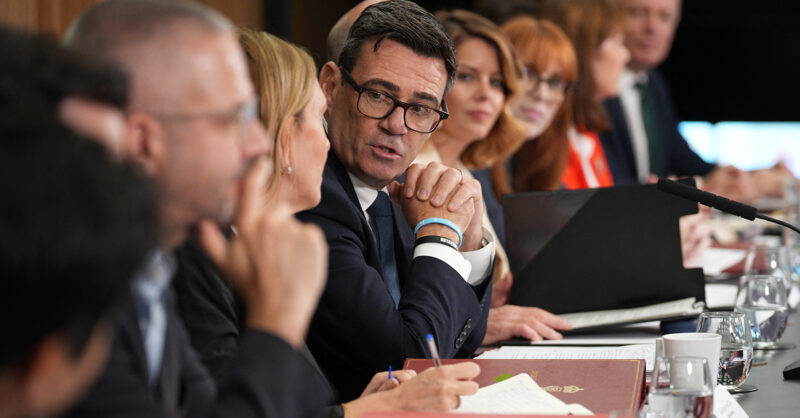
Andy Burnham stood at a train manufacturing site in Derby on Tuesday and declared an end to the era of Tony Blair's university-for-all ambition. The prime minister announced that from 2028, pupils in England will be able to study vocational subjects such as AI and manufacturing from the age of 14, alongside core maths, English and science — a national rollout of the Manchester Baccalaureate he pioneered as mayor.
Burnham's intervention comes as data showed more than one million young people across the UK are not in education, employment or training — the highest level in more than 12 years. "We've had a system built for too long around the university route," he said. "It sends a message to some young people that they're some kind of second-class citizens, and it's just not right."
“Burnham unveils technical education from age 14, rejecting Blair's university target amid record youth unemployment.”
The prime minister argued that Blair's 1999 target of getting 50% of school leavers into university had "let down" a generation seeking technical qualifications. "From today, Britain will value the hard hat every bit as much as the graduation cap," he said.
The new system, based on the Manchester Baccalaureate — a framework that gives teenagers a step-by-step route into technical careers — will be tailored to local industries, with mayors given greater control over education policy. The government expects the pathways to be running in some areas by 2028. A bursary of up to £4,500 will be introduced for families who would lose child benefit if their child took an apprenticeship.
But shadow work and pensions secretary Helen Whately dismissed the plan as "not a big bold announcement", telling BBC Breakfast: "What's going on there is a drastic shortage of jobs because Labour's policies over the last couple of years have killed job opportunities for young people. This announcement will not solve that." The Conservatives argued the real issue is a benefits system that means it "pays more to be on welfare than in work".
The Tony Blair Institute defended the former prime minister's focus on university access, claiming the future "belongs to the hard hat and the graduate cap alike". The MBacc, still in its infancy, has been rolled out across 101 secondary schools and colleges in Greater Manchester. Burnham declined to set a target date for reducing the number of young people not in education, employment or training: "The trend is rising at the moment, so the first thing I've got to do is to stop that rise."