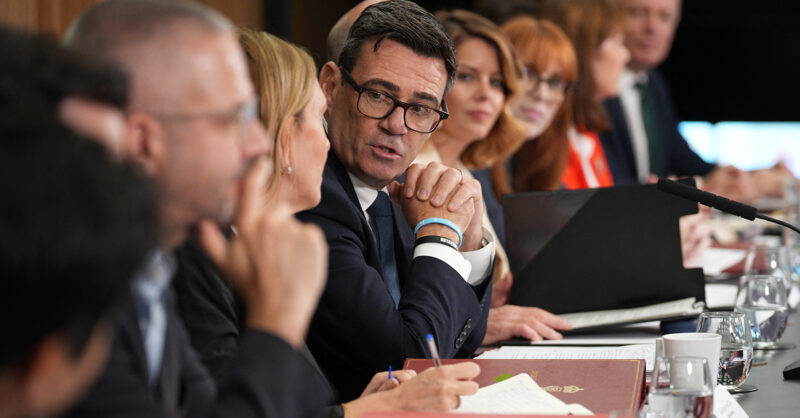
Voters across Greater Manchester will head to the polls on Thursday to elect a new mayor for the city region, a role second only to the prime minister and the mayor of London in English political power. The election was triggered after Andy Burnham won the Makerfield by-election last month, automatically resigning the mayoralty and paving his way to Downing Street.
The contest comes as a separate push for compulsory voting gains steam. A third reading of the Representation of the People Bill, which would lower the voting age to 16 and tighten campaign finance rules, has been postponed until after parliament’s summer recess. Among the amendments tabled is one from Labour MPs Antonia Bance and Bell Ribeiro-Addy introducing a “compulsory duty to vote”. Around 20 countries already enforce compulsory voting; Australia, which introduced the rule in 1924, enjoys turnout rates of 90%. In contrast, turnout for the 2024 UK general election was below 60% – falling to an estimated 53% when unregistered eligible voters are included, according to the Institute for Public Policy Research.
“Voters elect Andy Burnham's successor amid low turnout concerns and renewed push for compulsory voting.”
Low turnout is not evenly spread. The Constitutional Society’s 2025 report, Universal Suffrage?, found that in 2024 turnout was significantly higher among voters who were white (by 13 percentage points), wealthy (22), older (34) and outright homeowners (36), compared with ethnic minority, poor, younger and renting counterparts. The report warns that “low and unequal turnout can no longer be seen as merely a symptom of democratic malaise, but must now be understood as a contributing factor – one that warps the incentives of the political class, and contributes to skewed, inequitable and ineffectual policymaking… undermining political trust.” Progressives tend to lose when voters stay at home, making compulsory voting especially relevant to Labour’s chances.
Labour’s candidate to replace Burnham is Bev Craig, the current leader of Manchester City Council. She has led the council since 2021, succeeding Sir Richard Leese after his quarter-century in charge. Craig faces a tougher task in the nine boroughs outside Manchester: though Labour has often won across the city region, support varies. At a time when Labour held 95 of 96 council seats on Manchester City Council, eight of the ten Greater Manchester boroughs voted leave in the 2016 Brexit referendum – a dynamic that may give hope to Reform UK.
Burnham became the inaugural elected mayor in 2017 and was re-elected twice, each time outpolling his party and winning a majority in all boroughs. In the 2024 local elections, Labour came under fire from both left and right, with Reform UK and the Greens making ground. The Liberal Democrats also performed strongly, regaining control of Stockport from the Conservatives. For more than a year, Reform led national polls, but its by-election fortunes stalled in two Greater Manchester by-elections this year: Hannah Spencer took Gorton and Denton for the Greens, while Burnham romped to victory in Makerfield. Pressure from Restore Britain for the radical-right vote further complicates Reform’s pitch to floating voters. Meanwhile, Nigel Farage, embroiled in controversy about his finances and no longer an MP – he is fighting his own by-election in Clacton – has seen his party’s standing in national opinion polls fall. The Conservatives, buoyed by a Kemi Badenoch bounce, also remain in contention.
As voters cast their ballots, the question of who turns out – and who doesn’t – may shape not just the result, but the future of democratic engagement itself. Compulsory voting advocates argue that only when participation is universal will policy truly serve all.