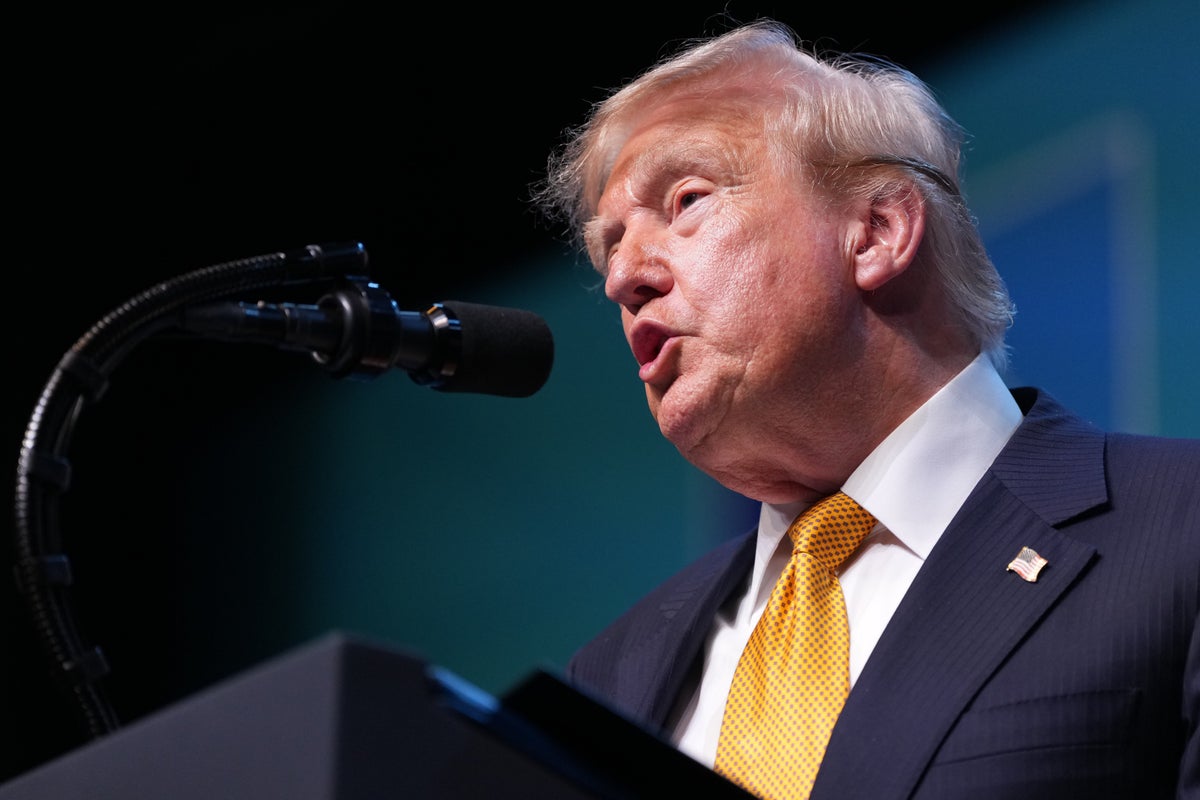
An erratic US president lambasts allies, threatens Iran, and demands Greenland—all within hours of declaring his 'tremendous love' for fellow leaders. Such scenes from the 2026 NATO summit in Ankara highlight the alliance's enduring fragility, even as its members reaffirm their 'ironclad commitment' to defend each other. But what exactly is NATO, and why should UK readers care about a military alliance founded 77 years ago?
NATO, the North Atlantic Treaty Organisation, is a political and military alliance of 32 countries from North America and Europe. Its core promise—enshrined in Article 5 of the North Atlantic Treaty—is that an armed attack against one member is considered an attack against all. This principle of collective defence was designed to deter aggression, particularly from the Soviet Union during the Cold War. Today, it remains the bedrock of the alliance, invoked only once after the 9/11 attacks on the United States. The alliance also serves as a forum for consultation on security issues, from terrorism to cyber threats, and has led crisis-management operations in places like Afghanistan and Kosovo.
“Explains NATO, its history, Article 5, and why it matters for UK security amid recent summit turmoil.”
The roots of NATO lie in the aftermath of the Second World War. In 1949, twelve countries—including the US, UK, Canada, and several Western European nations—signed the treaty in Washington, D.C., determined to prevent another devastating conflict. The alliance expanded during the Cold War, adding Greece, Turkey, West Germany, and others. After the Soviet Union collapsed, NATO took on new roles: peacekeeping in the Balkans, partnership with former Warsaw Pact states, and later, missions in Afghanistan and Iraq. The alliance also grew eastward, incorporating countries like Poland, Hungary, and the Baltic states, a move that Russia has long viewed as a threat. In recent years, NATO has focused on deterring Russia, following its annexation of Crimea in 2014 and full-scale invasion of Ukraine in 2022. Finland and Sweden joined in 2023 and 2024 respectively, doubling the alliance's border with Russia.
For UK readers, NATO is not an abstract concept. The UK is one of the alliance's founding members and hosts significant NATO infrastructure, including the Joint Force Command based in Northwood. Around 2,500 British troops are deployed on NATO missions in Eastern Europe, part of the alliance's enhanced forward presence to deter Russian aggression. British defence policy is heavily intertwined with NATO commitments: the UK is one of the few members to meet the guideline of spending 2% of GDP on defence, a target many allies have struggled to hit. The Foreign Secretary, Yvette Cooper, attended the 2026 summit, underscoring the UK's role in shaping alliance decisions. When Trump lambasted allies over defence spending and refused to back Ukraine aid without guarantees, British officials worked behind the scenes to maintain unity—a task that directly affects UK security.
Q: What is Article 5 of NATO? Article 5 is the clause that says an attack on one NATO member is an attack on all. It commits each member to take whatever action it deems necessary—including military force—to assist the attacked country. It has only been invoked once, after the 9/11 attacks, leading to NATO's mission in Afghanistan.
Q: Why does the US president's behaviour matter for NATO? The US is NATO's largest and most powerful member, providing the bulk of its military capability. When the US president, as in the 2026 summit, publicly criticises allies, threatens trade, or questions the alliance's value, it undermines the trust and unity that NATO depends on. European leaders worry that such grandstanding gives hope to adversaries like Russia's Vladimir Putin.
Q: Is NATO still relevant today? Despite internal tensions, NATO remains the primary forum for collective defence in Europe. The alliance has admitted new members, adapted to threats like hybrid warfare and cyberattacks, and continues to support Ukraine against Russian aggression. Its existence deters potential aggressors, and its dissolution would leave European security in disarray.
The next NATO summit was due to be held in Albania, but as of July 2026, no date has been set—leading to speculation it may not happen until 2028. The delay reflects ongoing uncertainty over US commitment. Meanwhile, the war in Ukraine continues, and the situation in Iran threatens global oil routes through the Strait of Hormuz. NATO's ability to adapt—and for its members to trust one another—will determine whether it remains the cornerstone of Western security or becomes a relic of a bygone era.